CONCEPT ART & ILLUSTRATION YEAR 1 – THE FUNDAMENTALS
- Length: 1 year
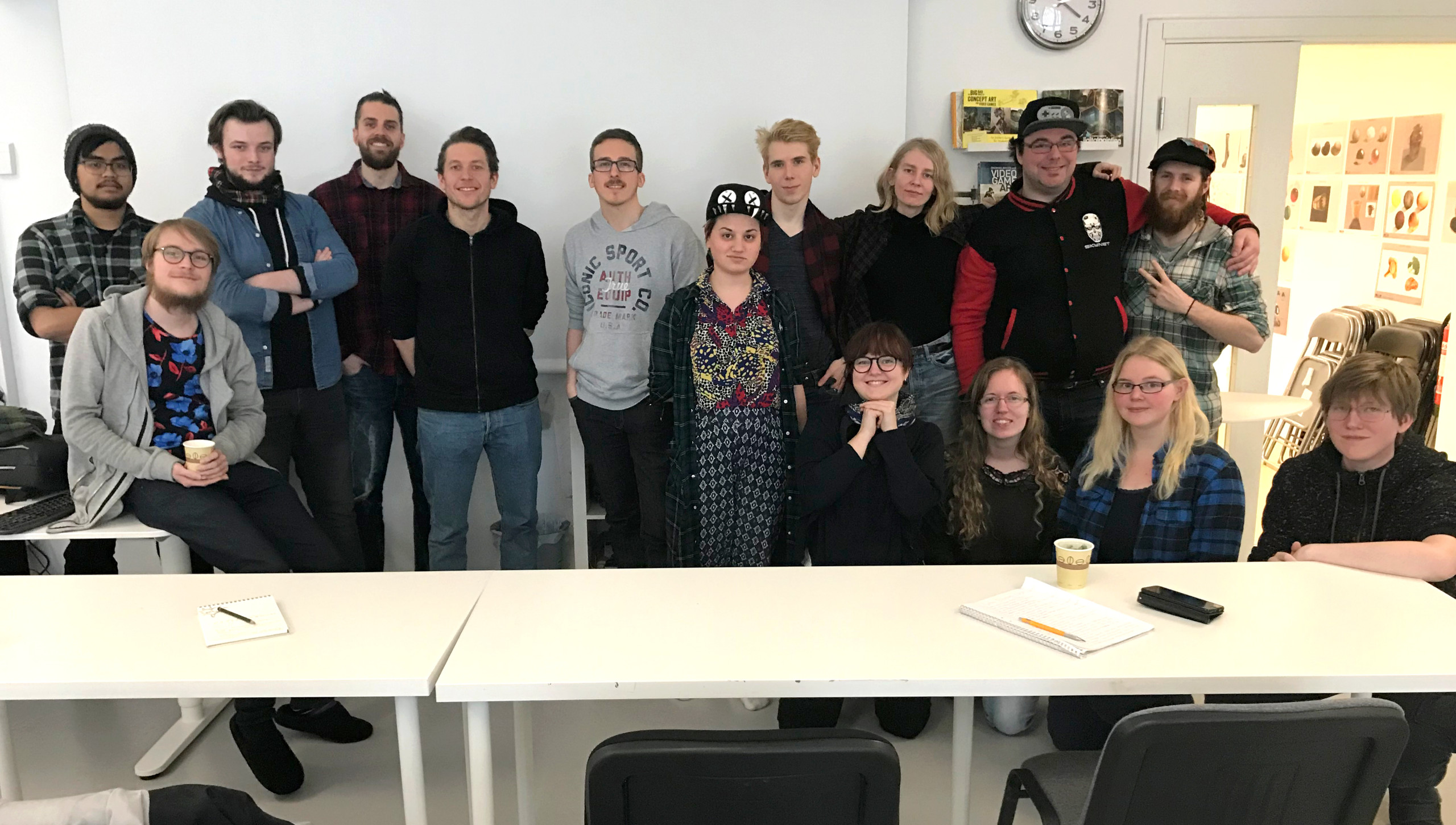
- Class size: About 20 participants
- Applictaion date: Mid April 2024
- Apply with: Individual portfolio and mandatory assignments, letter of intent and grades from high school or university (or other documents of merit)
WHAT IS CONCEPT ART & ILLUSTRATION?
A Concept Artist is a professional category that primarily exists within Entertainment Arts, i.e. art that is used in various parts of production within the entertainment industry, such as games, feature films, animated films, series, illustration, etc. A Concept Artist often works in the pre-production phase for games and films, designing and visualizing ideas (concepts) of how something should look, for example: a character, object, vehicle, creature, or environment. Concept Artists usually work completely digitally both with 2D and 3D, as part of a team in the studio but can also work freelance.
Illustration: In this industry (games and movies) the word Illustration means more elaborately painted pictures. These images can be part of a larger production in order to convey a sense of the project to a team during the course of the development, so-called ”key art”. Illustrations can also be images used for marketing purposes as promotional art, before a pitch or when the finished product, such as a game, is to be marketed. It can also mean splash art, matte painting, art for board games (card art), full-page illustrations for books, graphic novels, etc. An illustrator works freelance more often than concept artists do.
COURSE OBJECTIVE
This course aims to strengthen your basic artistic skills such as observation, drawing, light and shadow, perspective, anatomy, composition and color theory, the so-called fundamentals. Having strong skills in the fundamentals will, in turn, strengthen your ability to create from your imagination and do justice to your ideas and the ideas of others.Concept Art & Illustration 1 – The Fundamentals also serves as an essential and tailored foundation year in preparation for Year 2 – Design & Image Making. The course is primarily for those who are interested in working with design and image making in the entertainment industry, especially in the games and film industries, but it can also be a very good foundation for those interested in animation and traditional illustration.
COURSE OUTLINE
Autumn term:
- Dynamic sketching, linework, and sketching techniques
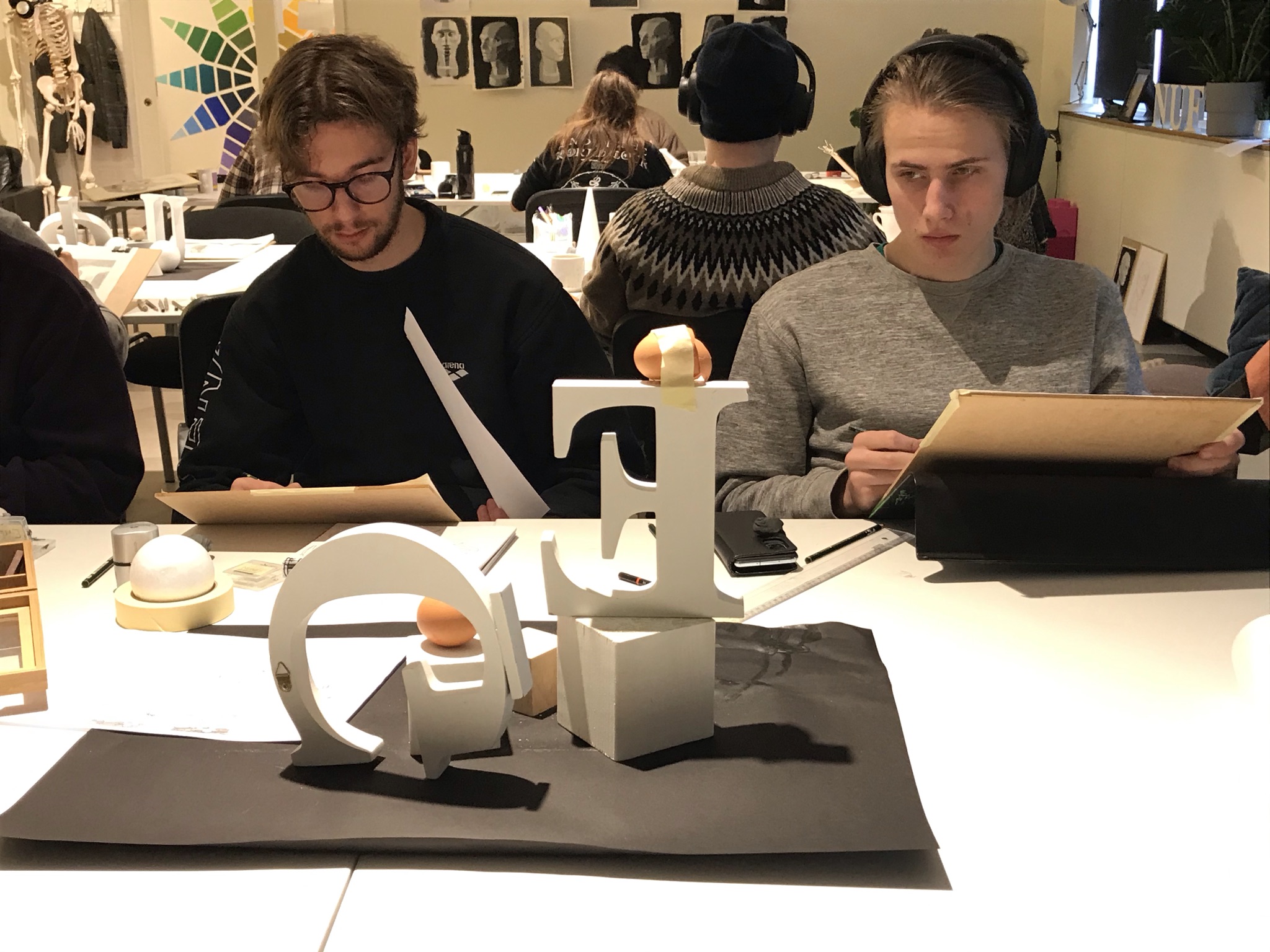
- Observational drawing and simplification
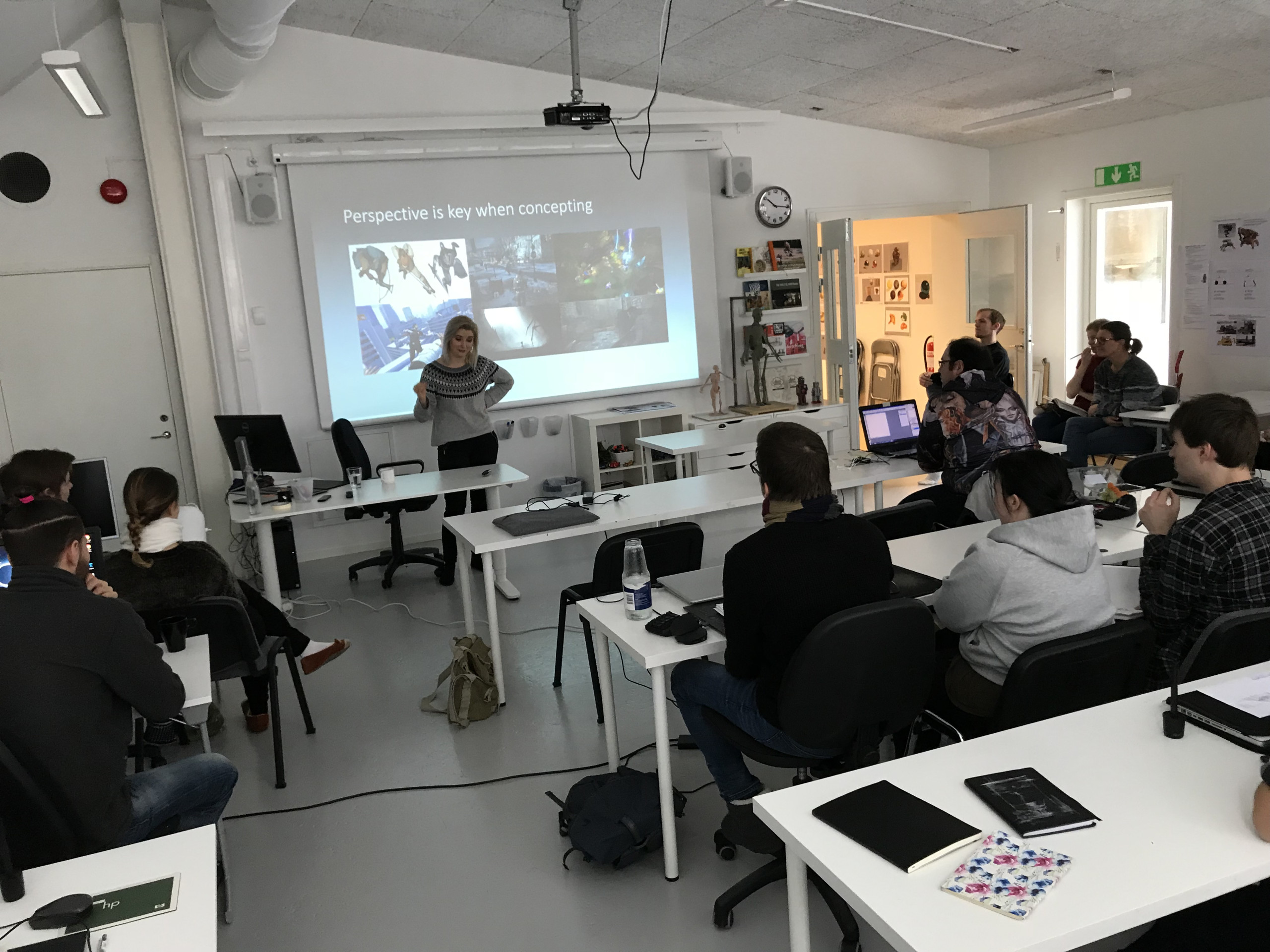
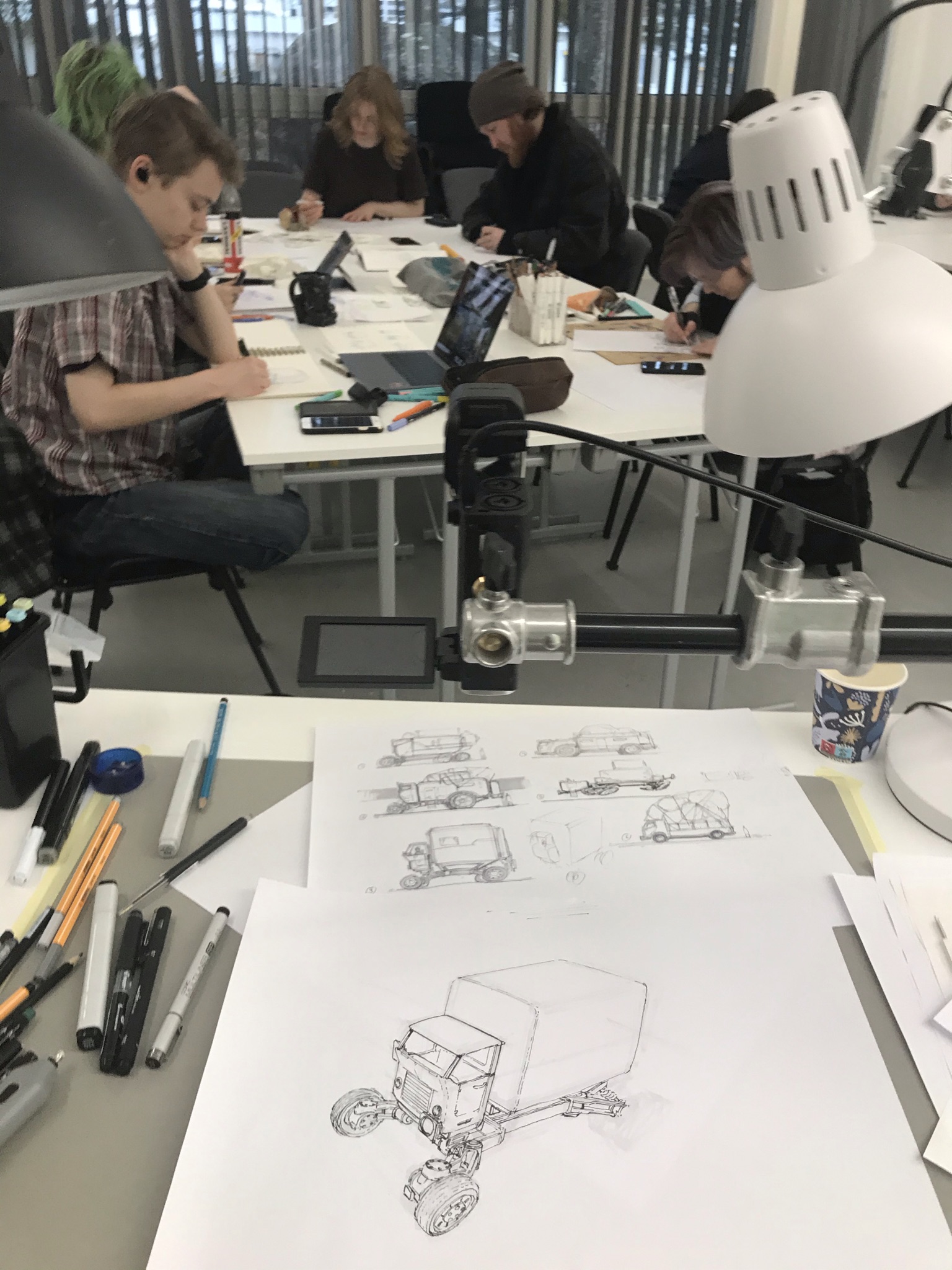
- Perspective drawing
- Human anatomy
- Light, shadow, planes, values
- Applied lighting from the imagination
Spring term:
- Human anatomy
- Color theory and painting
- Model painting
- Model drawing
- Image composition
- Digital painting
- Master study and style studies
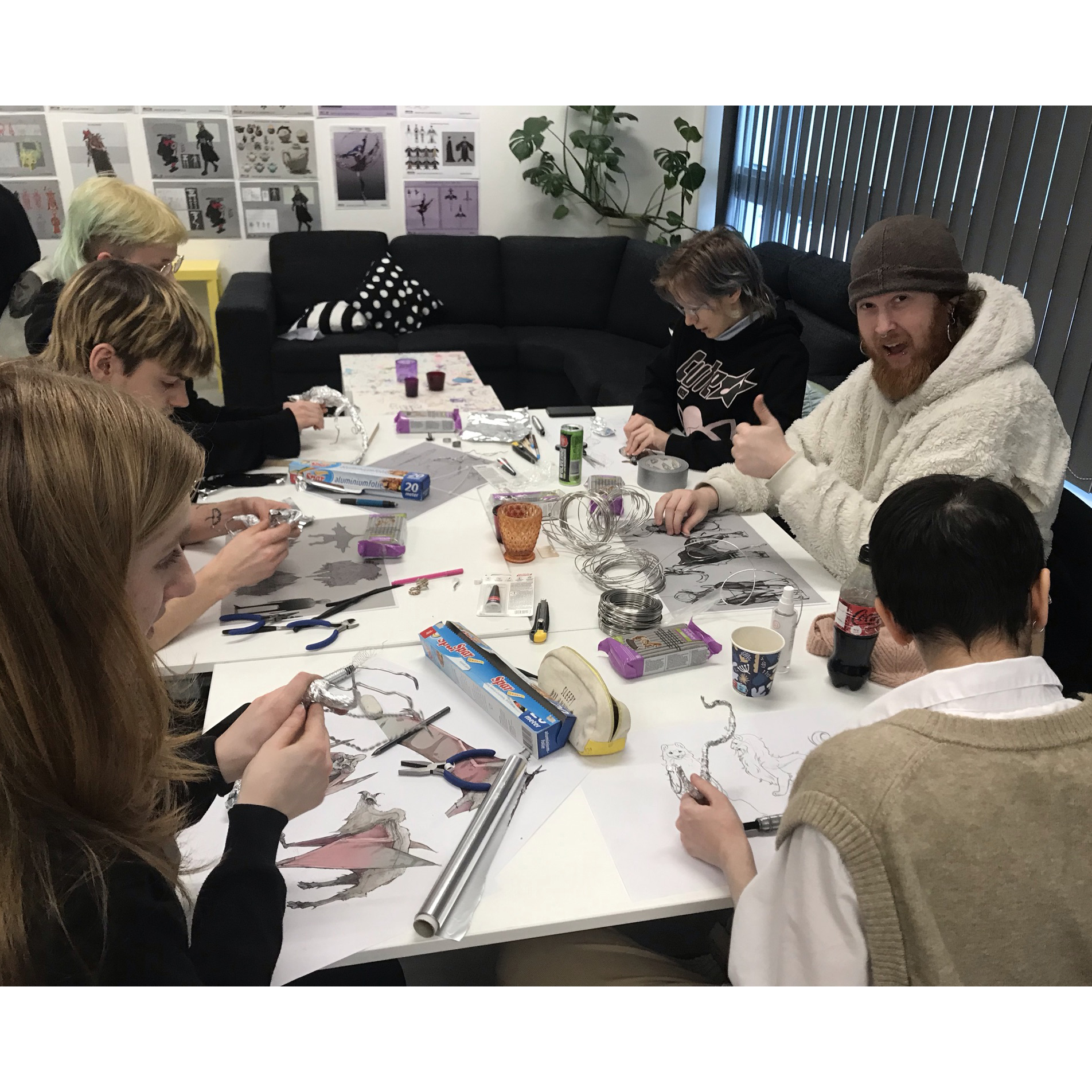
- Materials studies
- Plein air – landscape painting
Weekly – the whole year:
- Croquis – Every week on Fridays
- Art history
This course focuses on learning both observation and construction techniques. Getting good at both is the key to being able to realize and draw ideas from the imagination.
Observation: A major area of focus is developing strong visual perception – that is, studying and drawing things we see in front of us. Having good observational skills means, among other things, being able to draw things with the right proportions, volume and textures with an emphasis on realism. Observation can also mean learning to see shapes in a more simplified and abstract way and noticing how different parts of an image relate, both to each other and to the whole. We believe that observation is the cornerstone when developing skills for image making and design.
Construction: Construction means to build things. When you create from your imagination there are usually no ready-made templates – this can apply to objects, figures, faces and vehicles, etc. Even photo references will not always give you the angles, perspectives and proportions that you seek. In order to draw from the imagination, you first need to be able to break things down into basic simple shapes, such as spheres, boxes, cylinders and cones. You can then use these building blocks to build with again – this is construction. The central tool we use when working with this is perspective, which we practice a great deal, in both elementary and more advanced exercises. The goal then is for you to be able to work with perspective freely and quickly from your head.
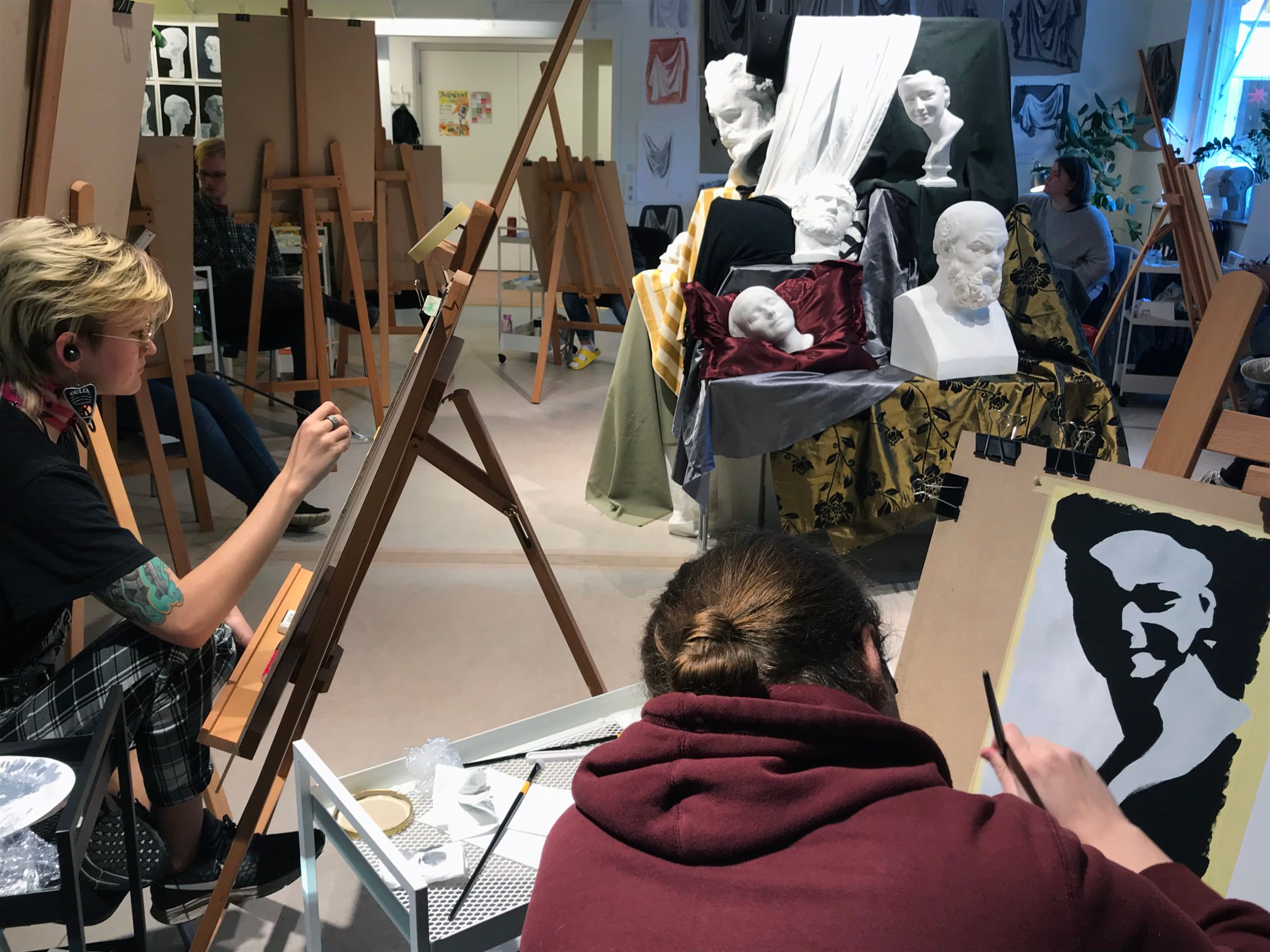
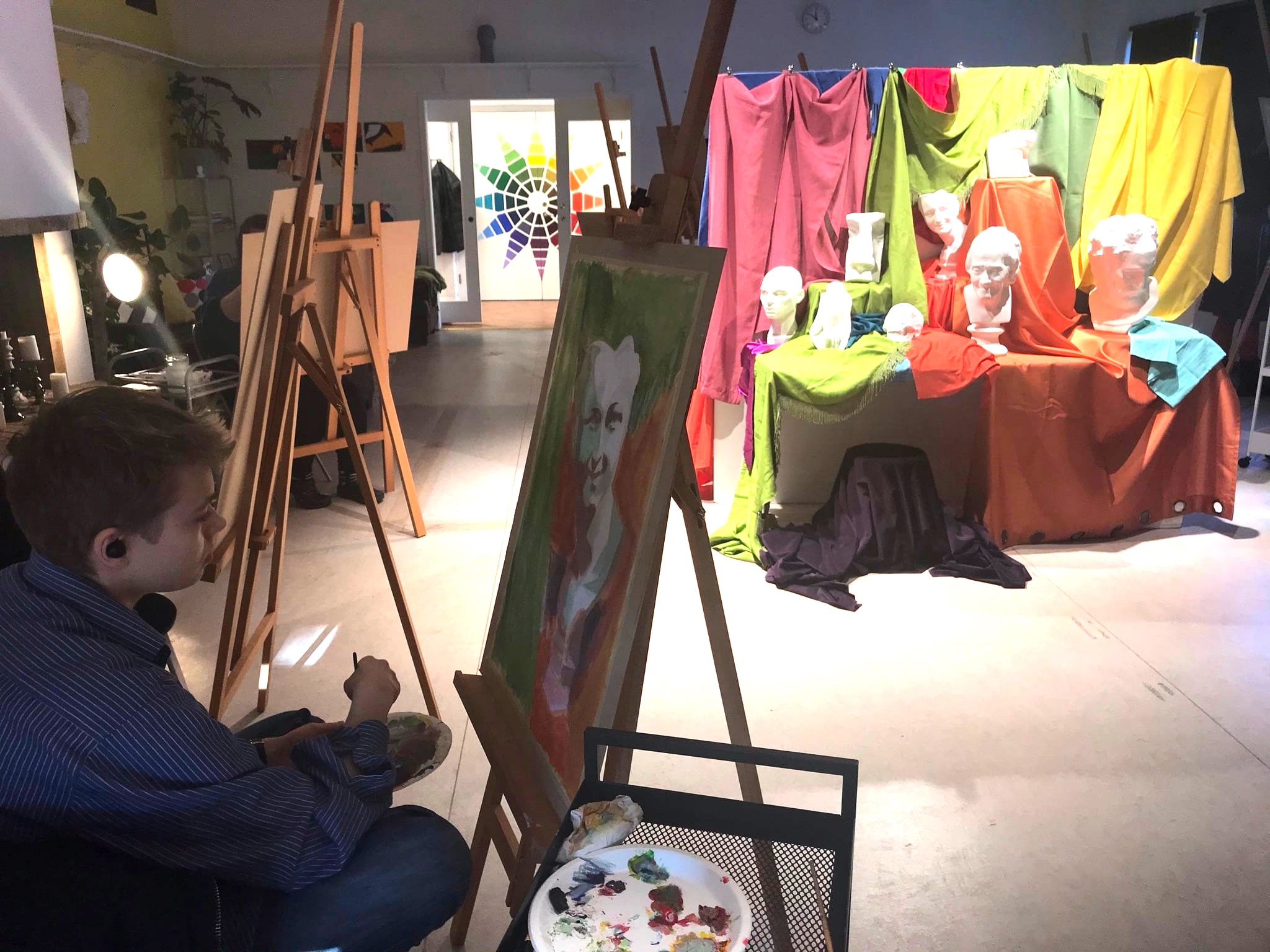
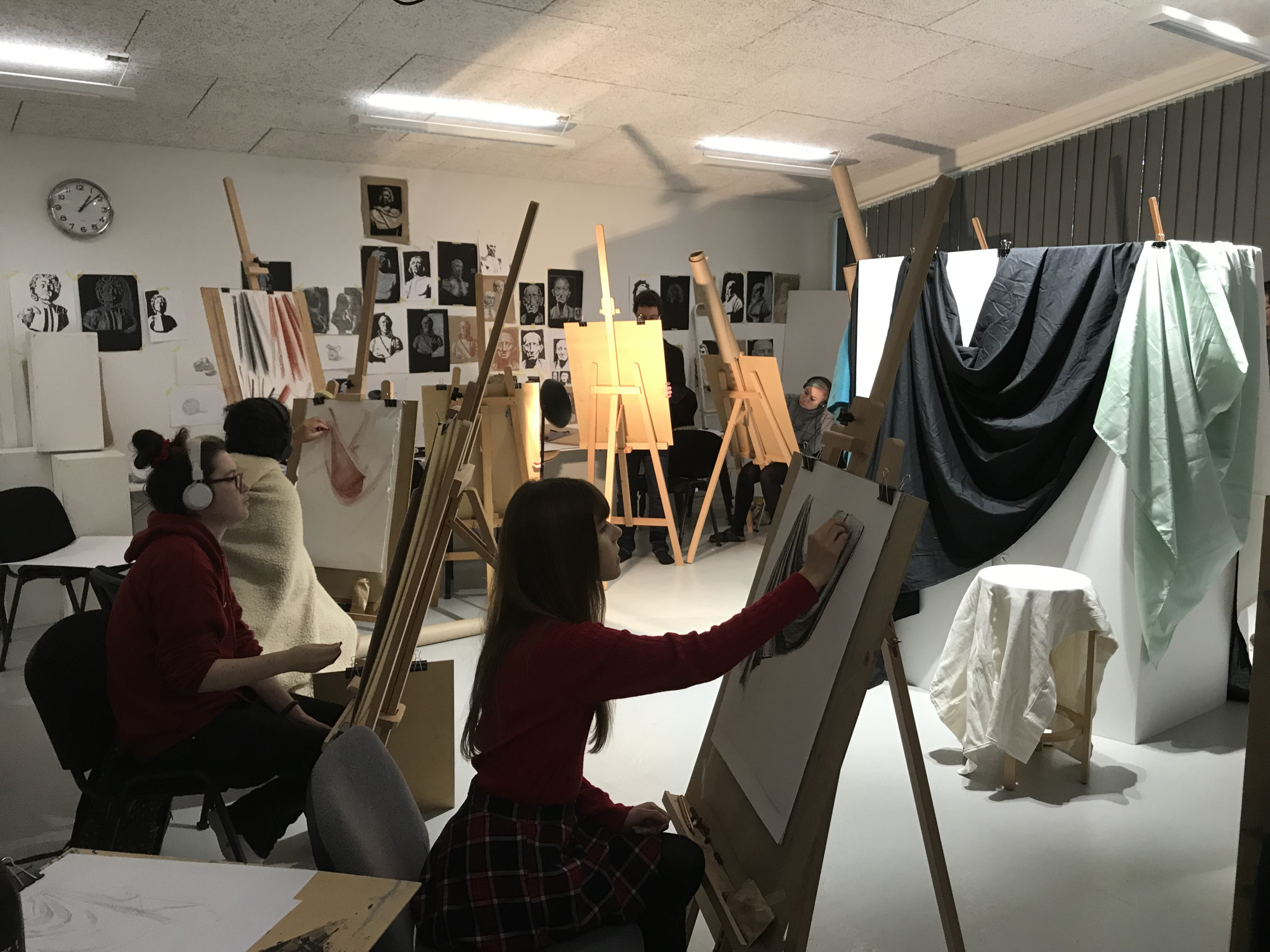
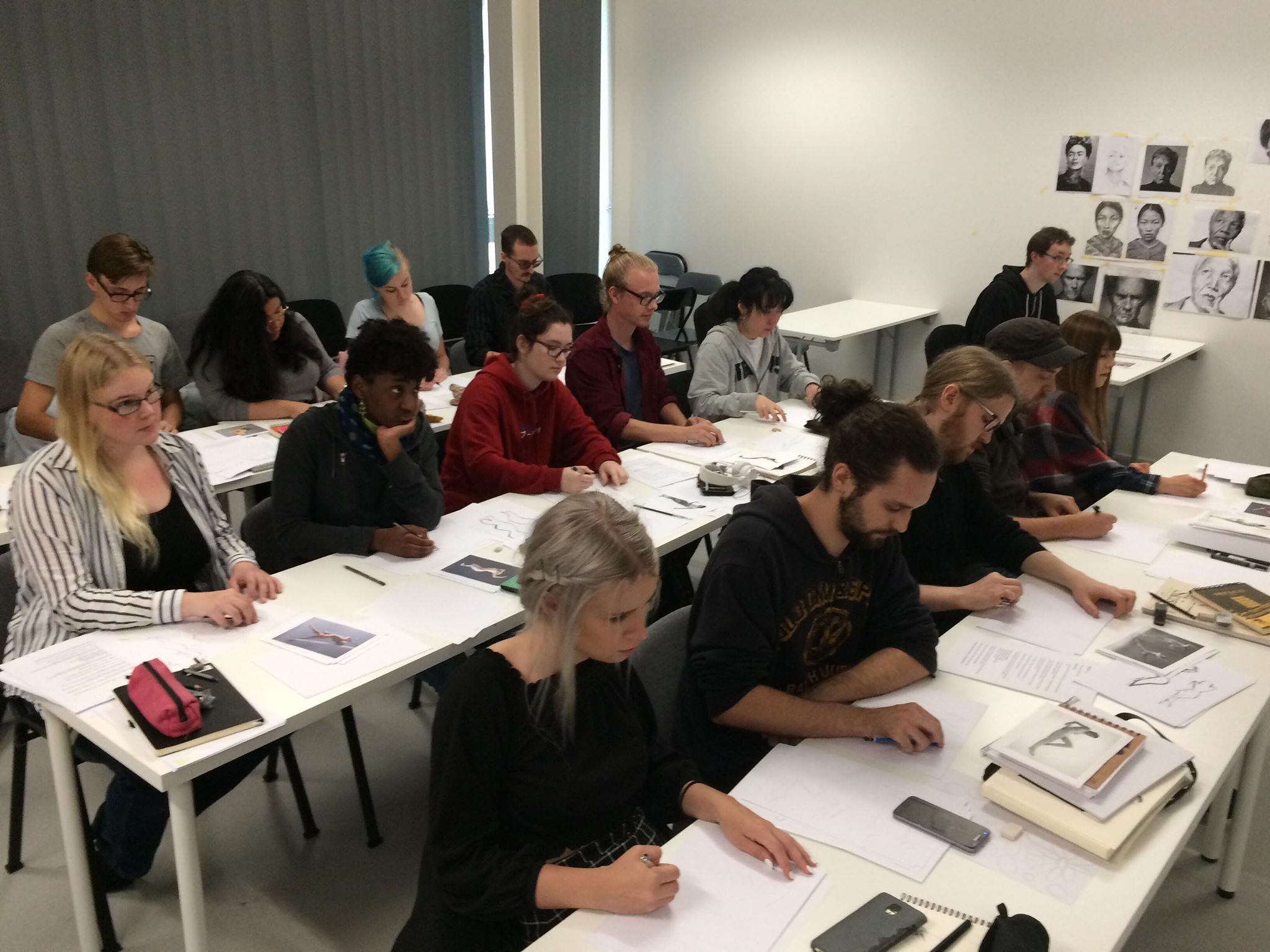
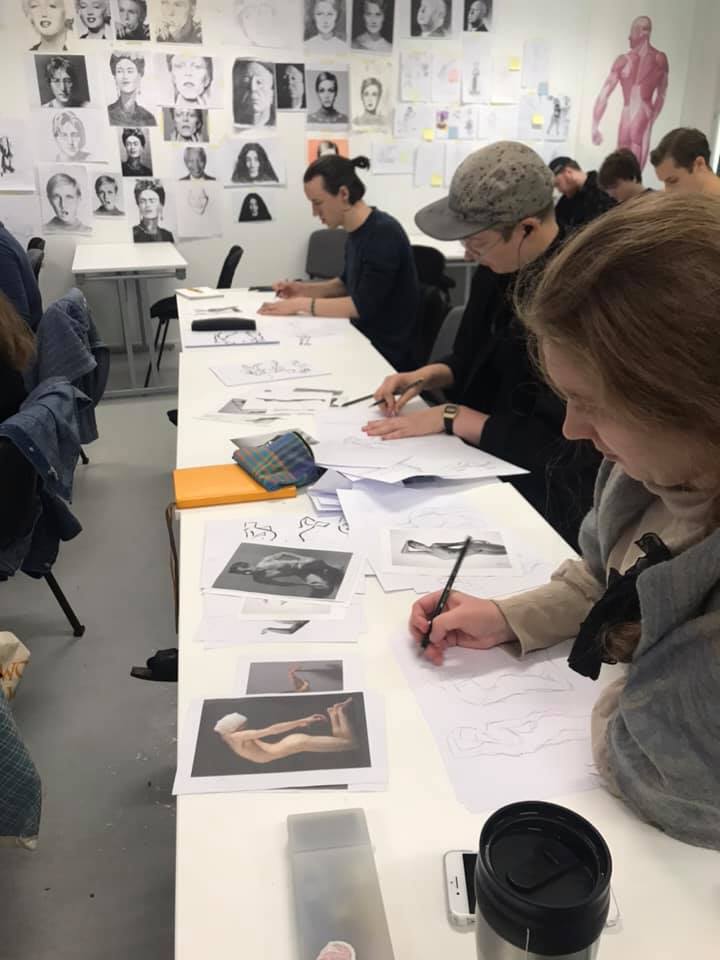
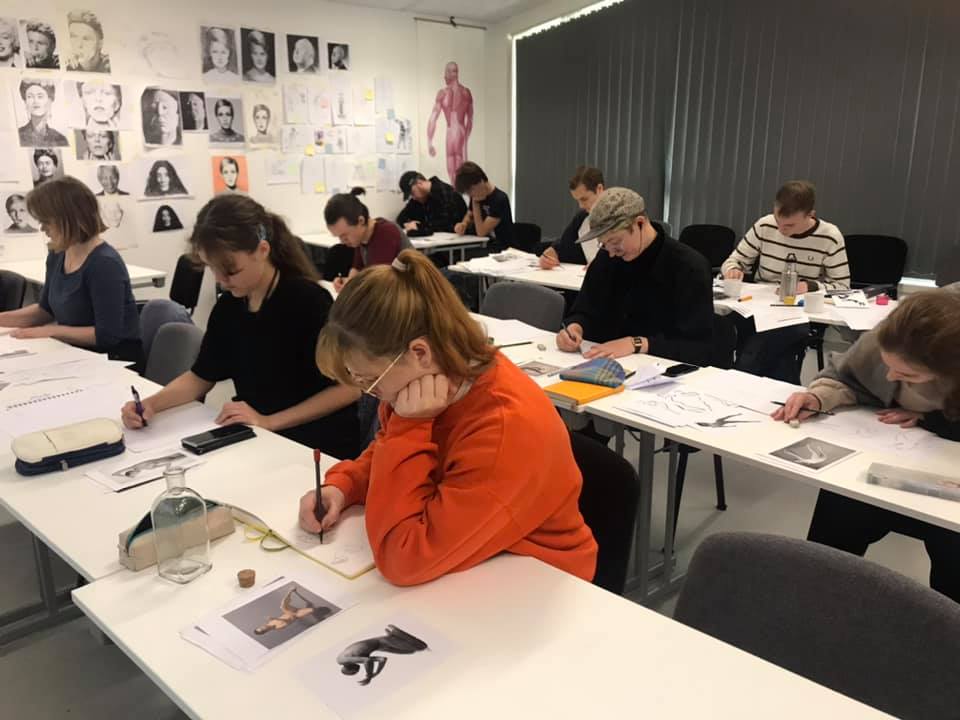
Fall semester: A significant portion of the fall semester is devoted to developing drawing skills, both with line and with shading. We use a great variety of physical objects in order to practice drawing proportions, perspective, textures as well as volume through light and shadow. Other observational exercises include drawing still lifes, portraits and landscapes. Every Friday we also have croquis and life drawing with a model. During the year, there are also longer sessions devoted to drawing and painting the figure.
Spring semester: During the second semester, we devote considerable time to color theory and painting as well as picture composition. We also study anatomy more indepthly as well as different methods for constructing the figure. When we start our introduction to digital painting, all assignments from that point on, are done digitally. Exercises include the study of material surfaces and textures, master painting techniques and lighting objects from the imagination. Throughout the year, there will be opportunities to apply the skills you’ve learned to more open assignments where you are working with your own concepts.
CURRICULUM & IMAGE GALLERY
Observational skills – Drawing from Life
- Depicting things realistically
- Getting the proportions right
- Aiming, measuring techniques
- Moving from symbolic thinking to objective vision
- Developing the ability to simplify what we see and to think in abstract forms
- Seeing the bigger picture rather than focus on details
- Creating good shapes and lines
Drawing basics – The line, about 1 week
- Line weight
- Mark-making: Hatching techniques, dots, scribbles
- Cross contour lines, overlpping lines
- Dynamic sketching
- The language of the line – what does a line convey?
Perspective, about 5 weeks
- General rules of perspective
- 1,2,3 point-perspective
- Houses, objects, interiors, vehicles
- Construction, draw through shapes
- Foreshortening
- Circles and cylinders in perspective
- Measurement methods in perspective
- Organic forms in perspective
- People in perspective
- Designing houses and scenes and constructing them in perspective
Light, shadow and values, about 5 weeks
- Using planes to convey volume
- Theory and concepts around light and shadow
- Developing the ability to see and reproduce values
- Simplifying light and shadow into good shapes and clarifying the families of light and shadow
- Using contours and edges in different ways
- Creating depth within the image
- Working with pencil, charcoal, marker, chalk
- Working in black and white with acrylic paint
Lighting
- Work with light and shadow from the imagination
- Rendering techniques
- Local values, value transitions
- Colored and reflected light and the effect on local color
- Studies of different lighting settings
- Learn to calculate cast shadows
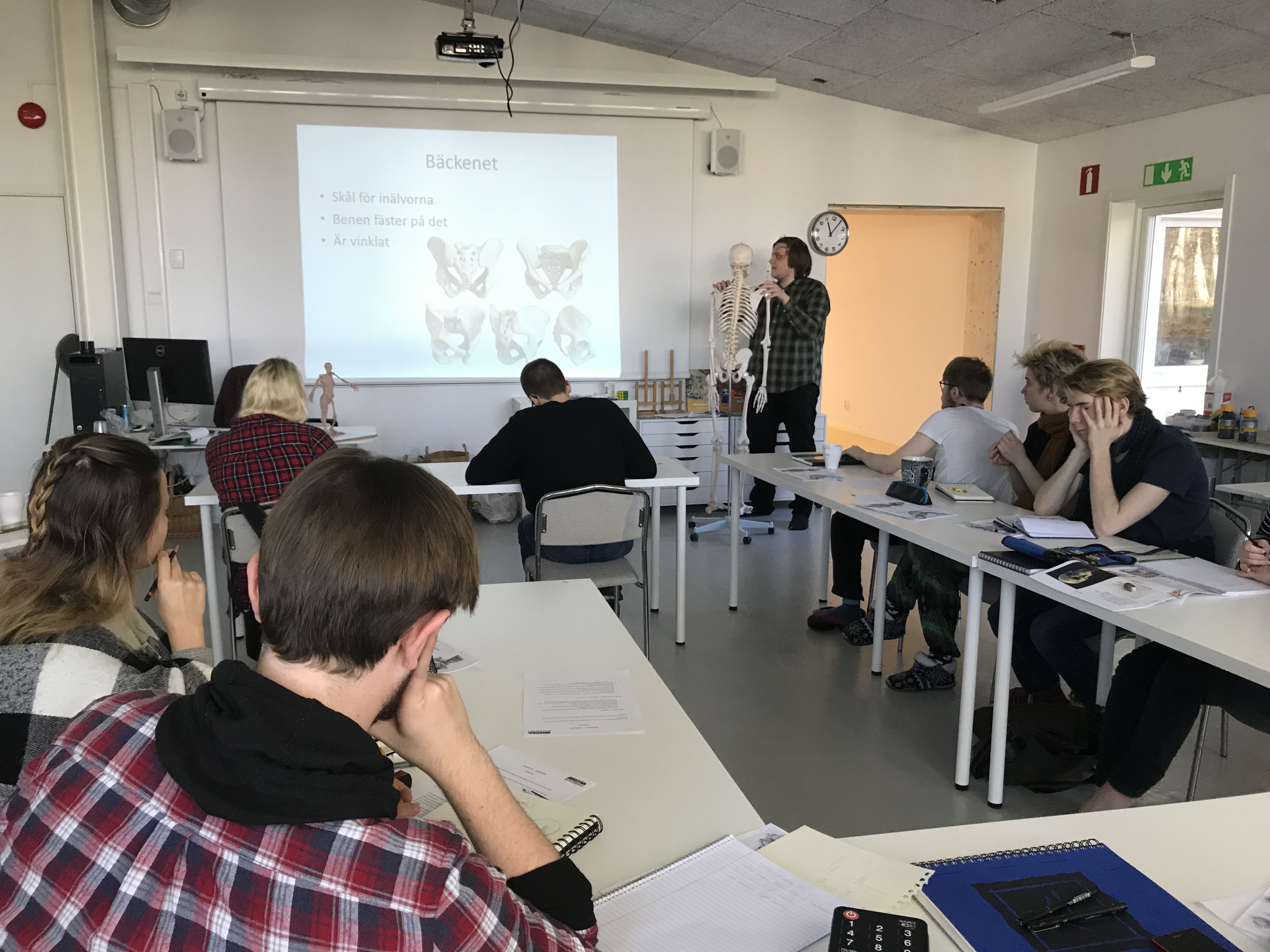
Anatomy, about 2 weeks
- Body proportions
- Balance, centers of gravity
- Landmarks, articulation points
- Constructing the figure with basic shapes – cylinders, boxes
- The skeleton
- Muscles and how movement affects them
Pictorial composition about 2 weeks
- Creating focal points
- Learning about and using different compositional structures
- Creating depth of field in the image
- Learning how different elements of the image collaborate
- Creating a balance between uniformity and variety
- Creating good shapes and lines
- Working with collage, painting, drawing, etc.
Color theory, about 1 week
- Concepts and theory of color
- Developing the ability to see and mix color
- How colors and colored light influence each other
- Color composition
Traditional painting, about 5 weeks
- The painting process, developing a painting
- Using different brushwork
- Painting from still lifes, portraits, and the figure
- Trying different color schemes and using limited palettes
- How to paint with acrylics and to some extent gouache and watercolor
- Image analysis
- Plein air (landscape painting)
Digital painting, about 5 weeks
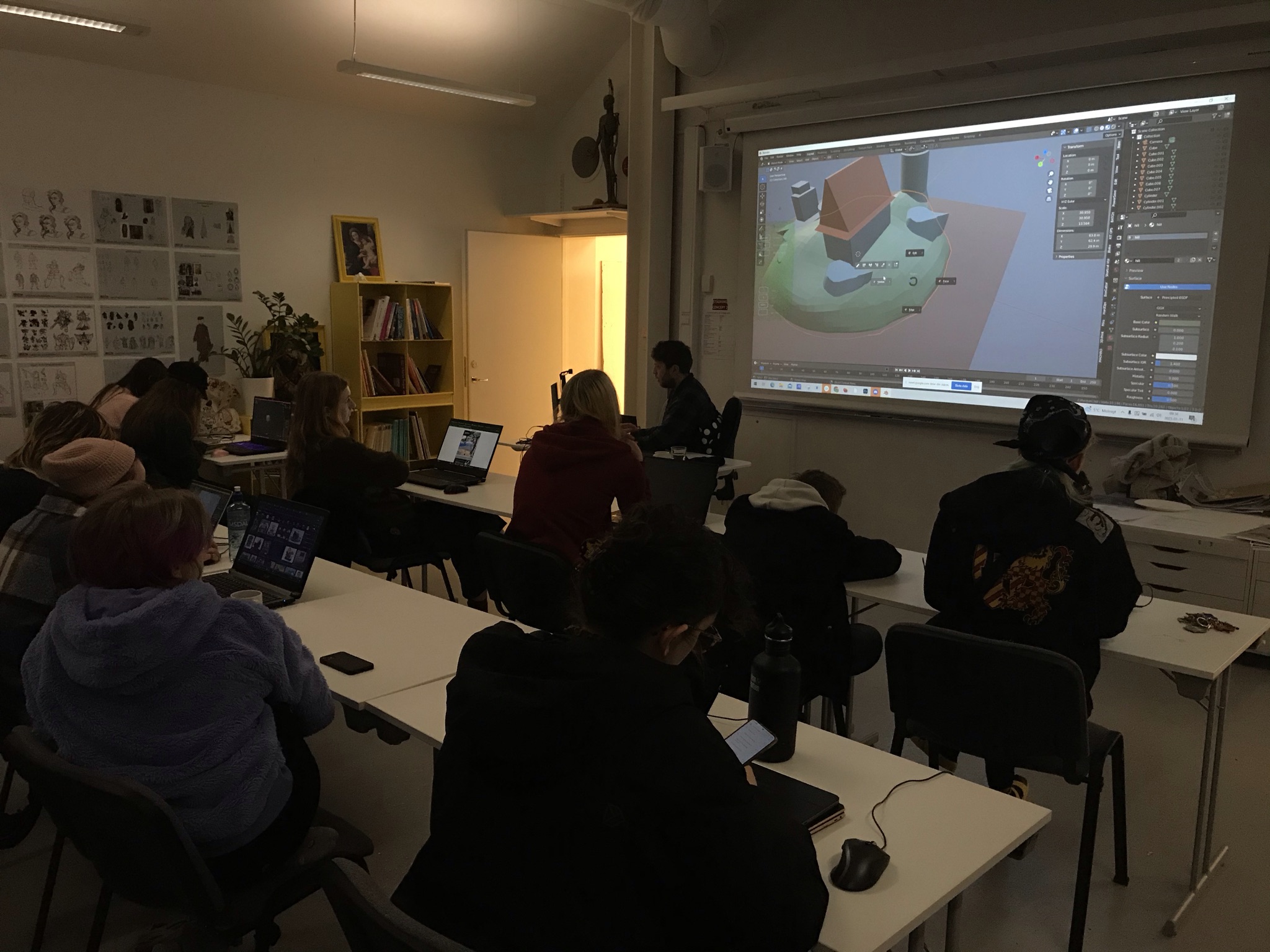
- Introduction to Photoshop and lots of tools
- Rendering methods
- Painting techniques, brushwork
- Master studies
- Style Studies: Analyze the styles of other artists and then practice painting in the style of another object.
- Material properties: learning about properties of different types of materials. From completely matte to reflective.
WEEKLY THROUGH THE WHOLE YEAR
Art history
The development of art throughout our western history. Development of motif, medium, technique, purpose, artist’s role, etc.
Croquis – Every Friday
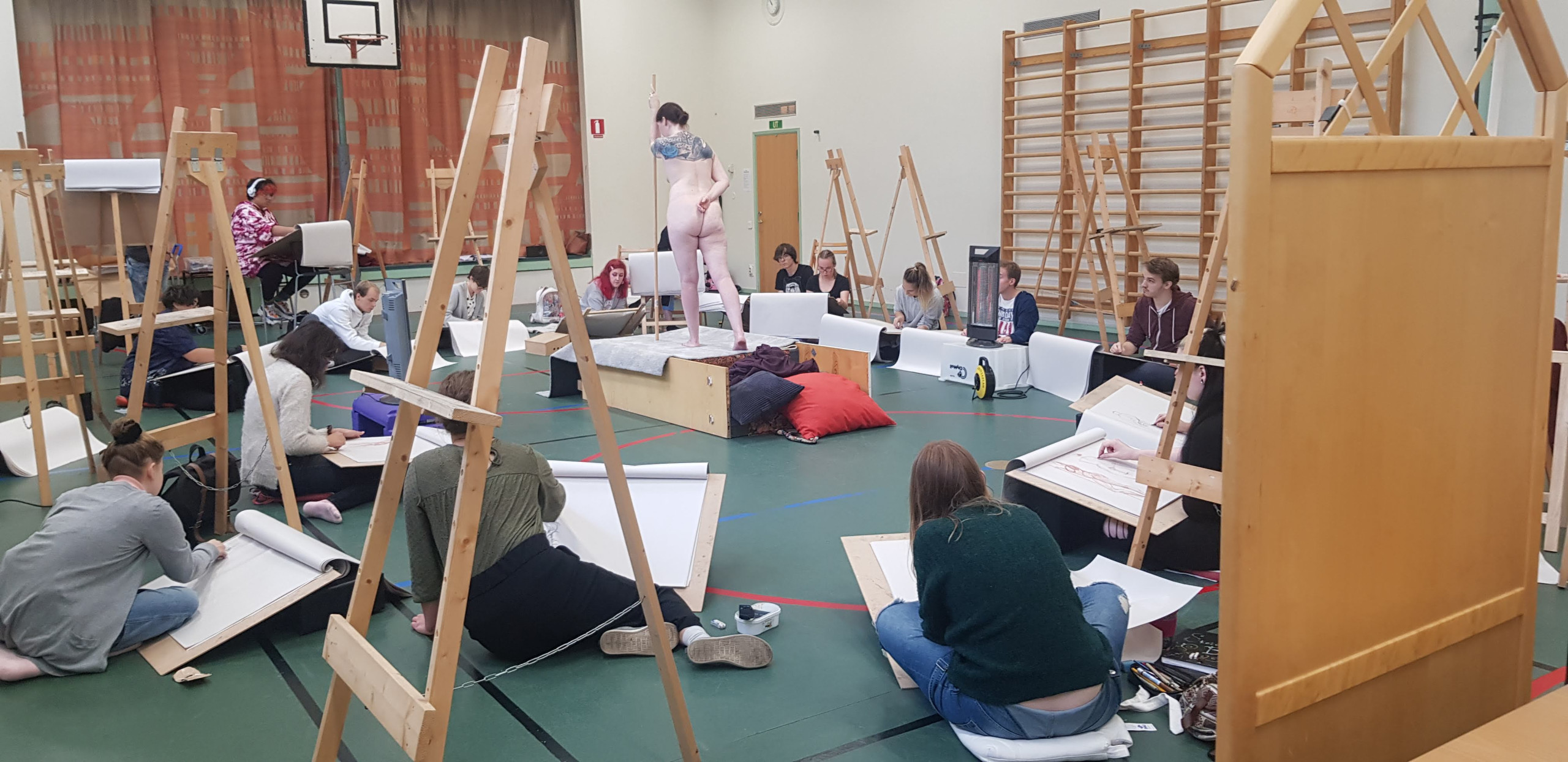
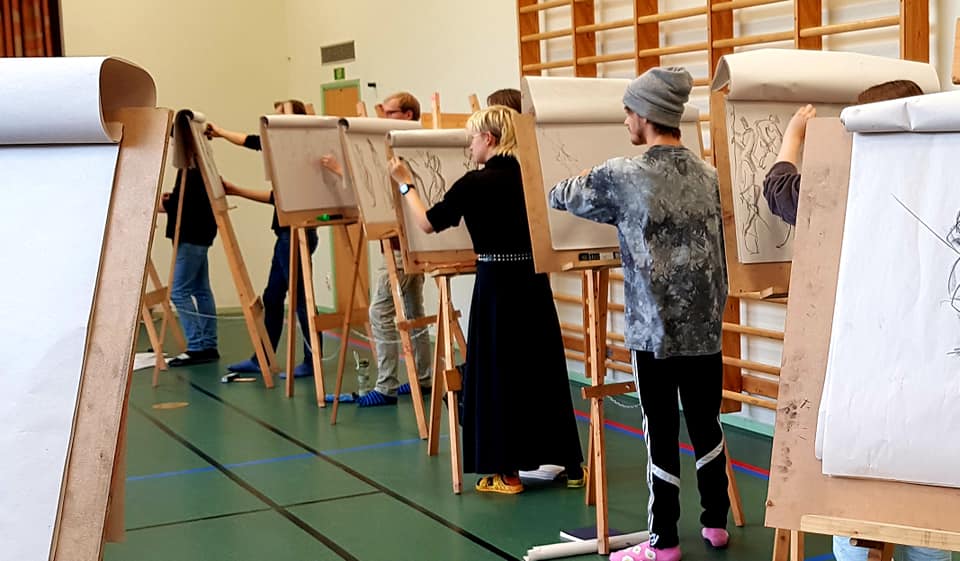
One thing that distinguishes our education that we are proud of is the way we work with croquis and model drawing. We invest a lot in this subject as we think it is important and very instructive. Every Friday is croquis with several classes at the same time and two teachers working at the same time to give good feedback to everyone. All sessions have a clear theme that is covered and the classes are prepared with theory in advance during the week. We are in contact with and employ many different and talented croquis models so there will be an interesting and educational variety during the year.
- Gesture, line of action, movement of the body.
- The structure of the body, proportions and centers of gravity, and landmarks etc.
- Observation: aiming and measuring, negative shapes
- Different ways to simplify and build up a body, e.g. the bean, boxes & cylinders.
- Foreshortening and the body in perspective
- Light & shadow
- Character sketch – dressed models acting in different scenarios
- Model drawing with anatomy focus (long poses)
WHO IS THE COURSE FOR?
Concept art & Illustration is an art and design course that is adapted for those who want to work with image creation, especially in the game or film industry, and the purpose of the course is to develop relevant knowledge and prepare for a professional life within this. If you want to apply for further studies in, above all, game graphics, the course can give you a better starting point in terms of your image and design skills. This course can also be a good preparation for those who want to focus on more traditional illustration, animation or sequential storytelling.
You need to have a burning interest and strong motivation for developing your skills within the fundamentals, the primary focus of Year 1. The pace will oftentimes be quite high and you need to work consistently, focused on the heart of each exercise. This is a boot camp in artistic fundamentals – be prepared for a lot of exercises and be patient about it – it will pay off!
YOUR TEACHERS
Each course in Concept Art & Illustration has full-time teachers who work with planning, teaching and giving feedback. We are also there for our participants on more individual levels and follow up their development throughout the school year with individual evaluations. Classroom hours are between 9.00-15.00 everyday and we are present in classrooms and studios both for teaching and feedback. After 15.00 you are expected to finish assignments if need be, or study on your own. Your teachers are well versed in our subjects, passionate about fundamentals and are well acquainted with concept art & illustration.
GUEST TEACHERS AND LECTURERS
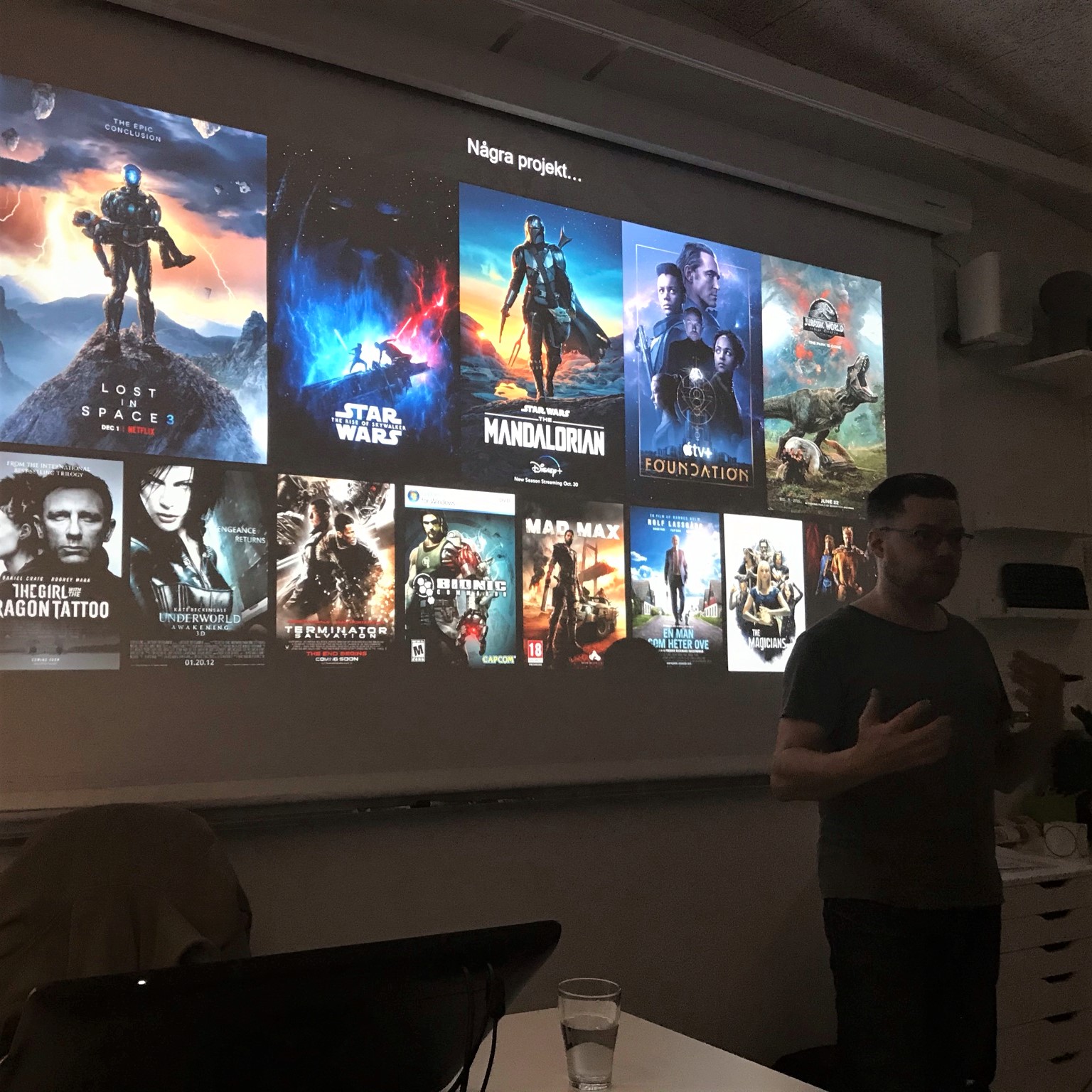
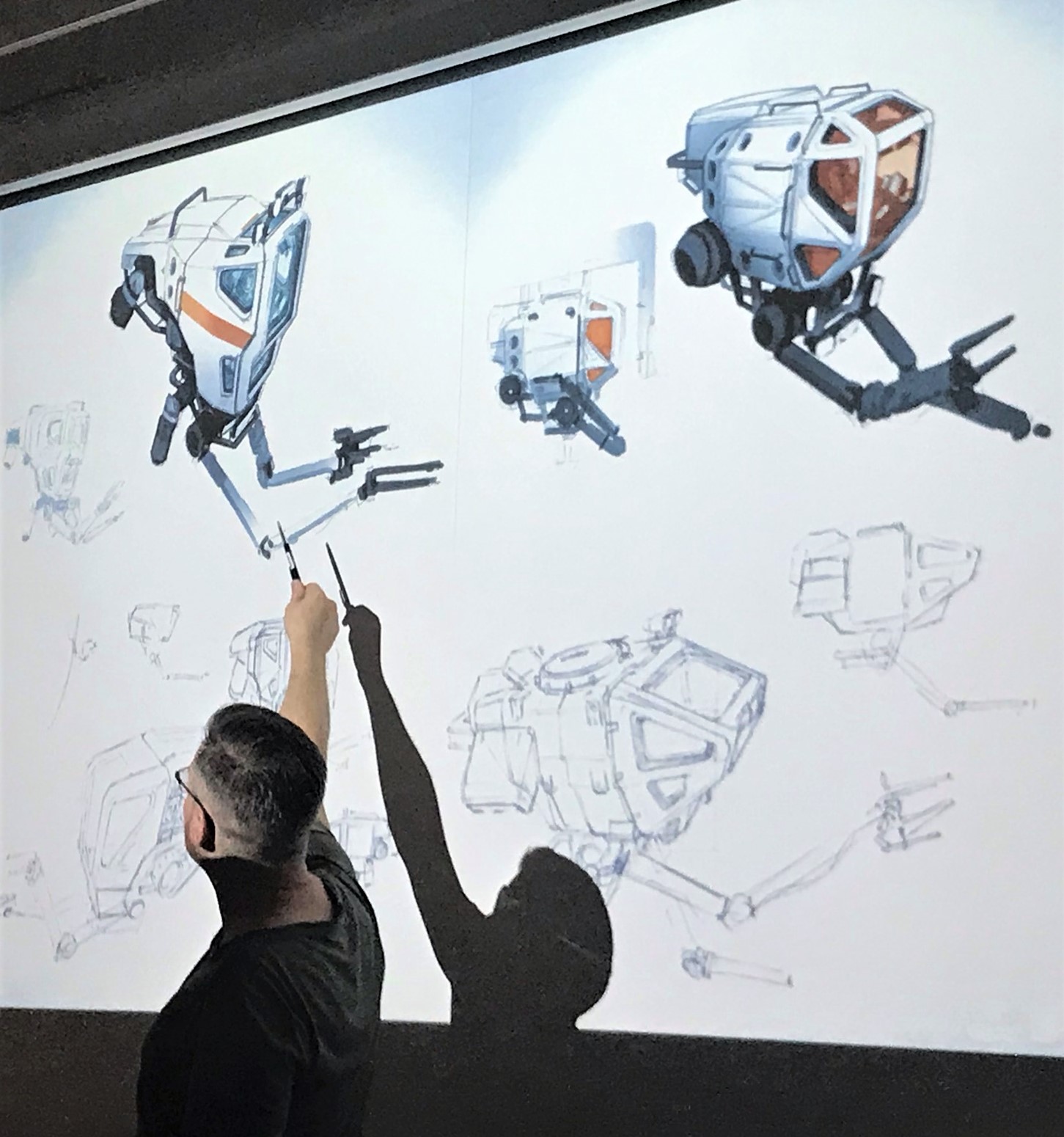
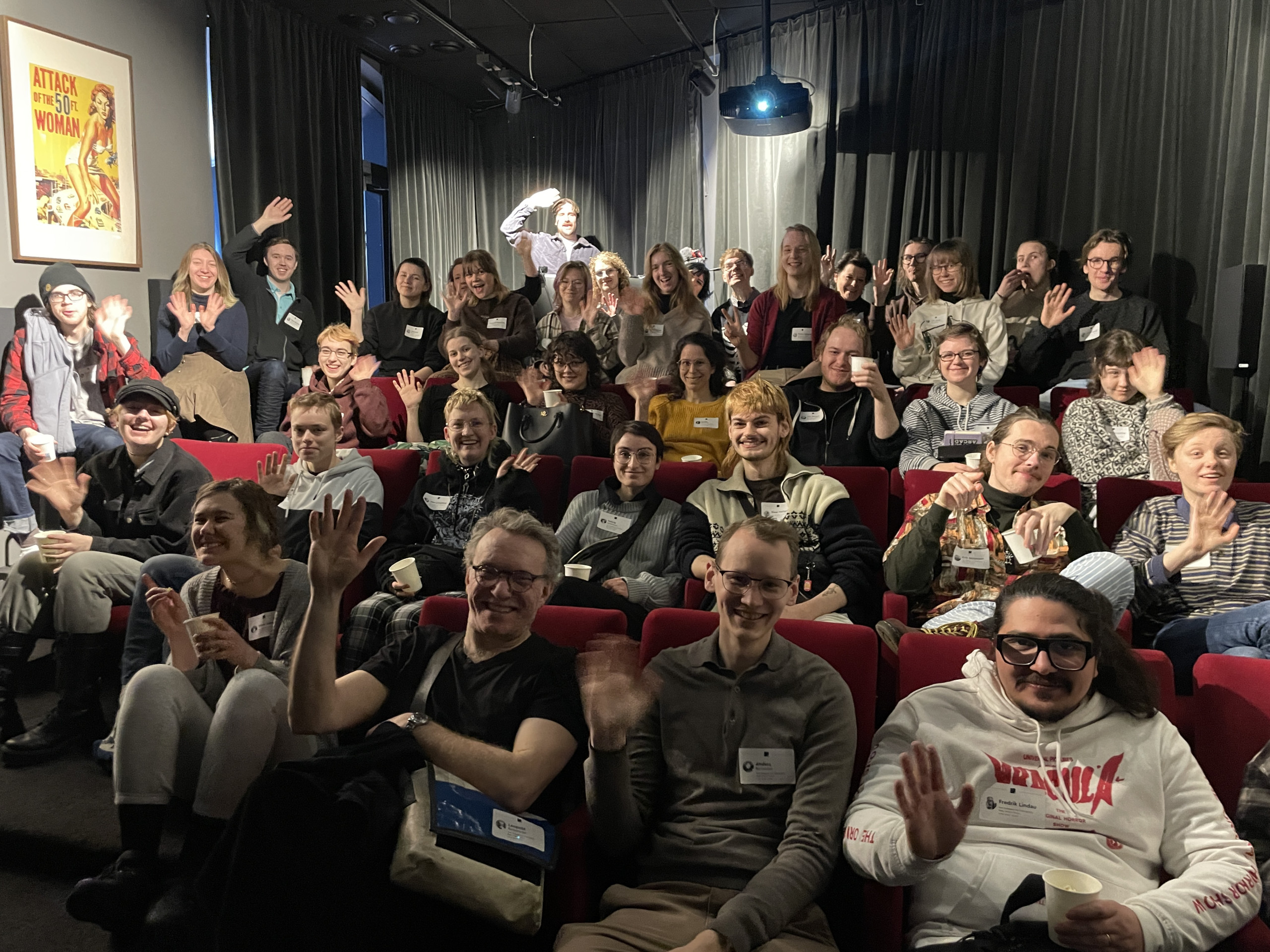
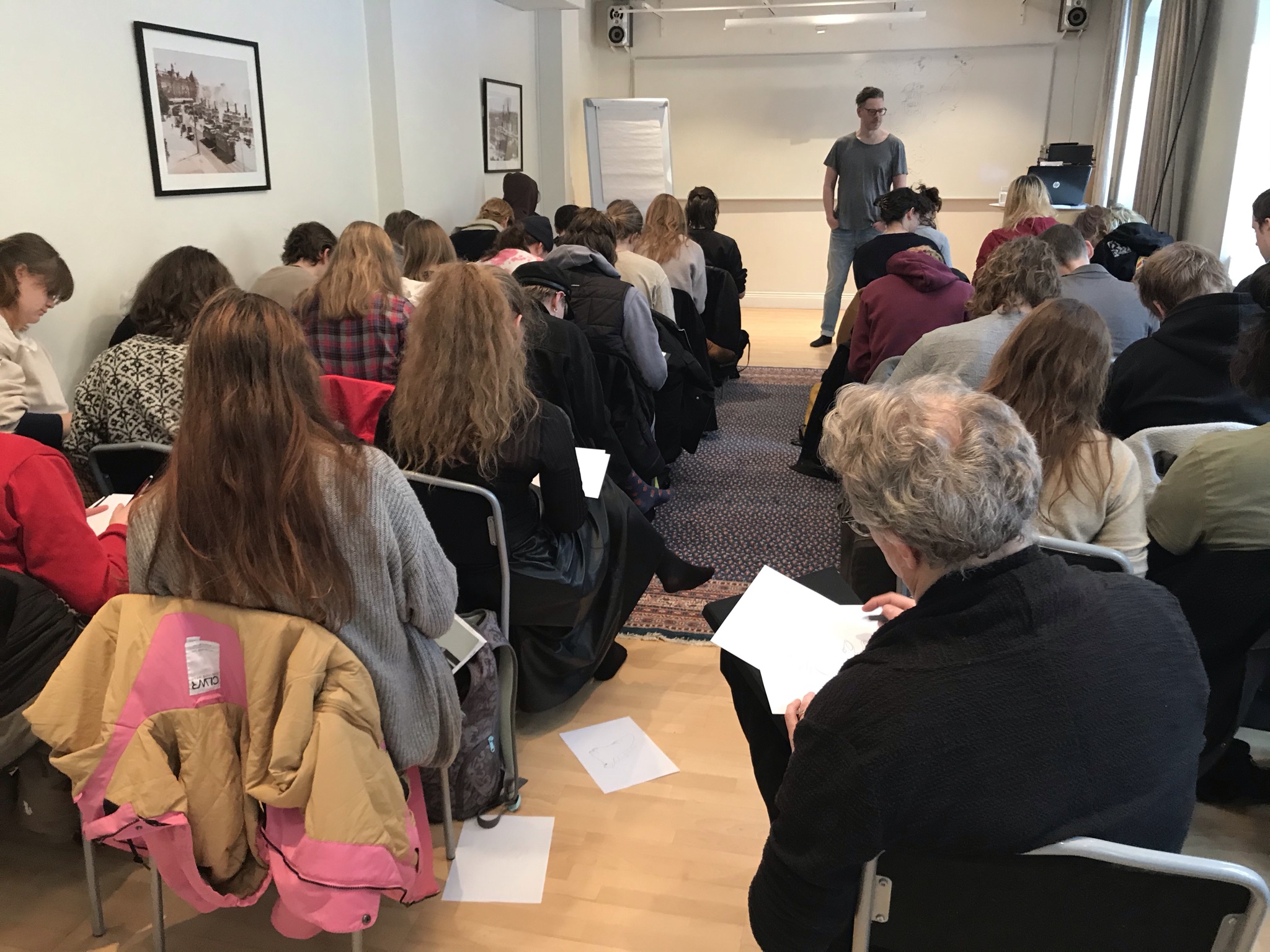
During the year, we regularly take in guest teachers and lecturers who are professionals in the game and illustration industry. This gives insight into professions and possible paths forward in game development, 2- and 3-D graphics, illustration, comic creation, animation, etc. The guest techers are mainly teaching year 2 in various workshops but year 1 join in on most of the lectures when the guests present themselves and their work. In recent years we have had the pleasure of meeting:
- Johan Egerkrans (Illustration)
- Simon Stålenhag (Freelance illustration etc)
- Even Mehl Amundsen (Freelance illustration etc)
- Atey Ghalian (Illustration & concept art, CEO Envar studios)
- Thomas Chamberlain-Keen (Illustration & concept art )
- Martin Bergqvist (Concept art)
- Simon Fetscher (Concept art Mood Visuals)
- Mikael Eriksson (Concept art Goodbye Kansas)
- Alexander Forsberg (Freelance illustration)
- Viktor Becker (AD/Concept Art– Zoink Games)
- Henrik Rosenborg (Freelance illustration)
- Veronika Fedorova (Freelance illustration)
- Mattias Adolfsson (Freelance illustration)
- Daniel Jonsson (Character 3D-artist Machine Games)
- Louise Meijer (Concept artist and Art director)
- Pontus Ullbors (AD & Concept art Landfall games + Freelance illustration)
- Anders Larsson (2D-graphics, UI, Fatshark)
- Nicolas Krizan (Illustration)
- Linda Chuu Bjurhager (2-D-animation, storyboarding)
- Leopold Baranowska (Vis dev, storyboard m.m.)
- Gabor Steizinger (animation)
- Andrea De Dominics (Concept art)
- Ellen Barkin Söderholm (Freelance Illustration)
STUDY VISITS AT STUDIOS
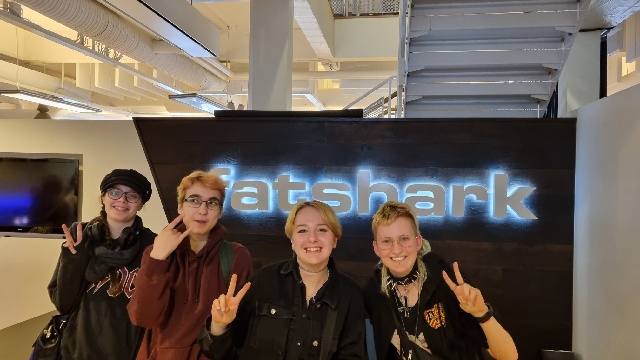
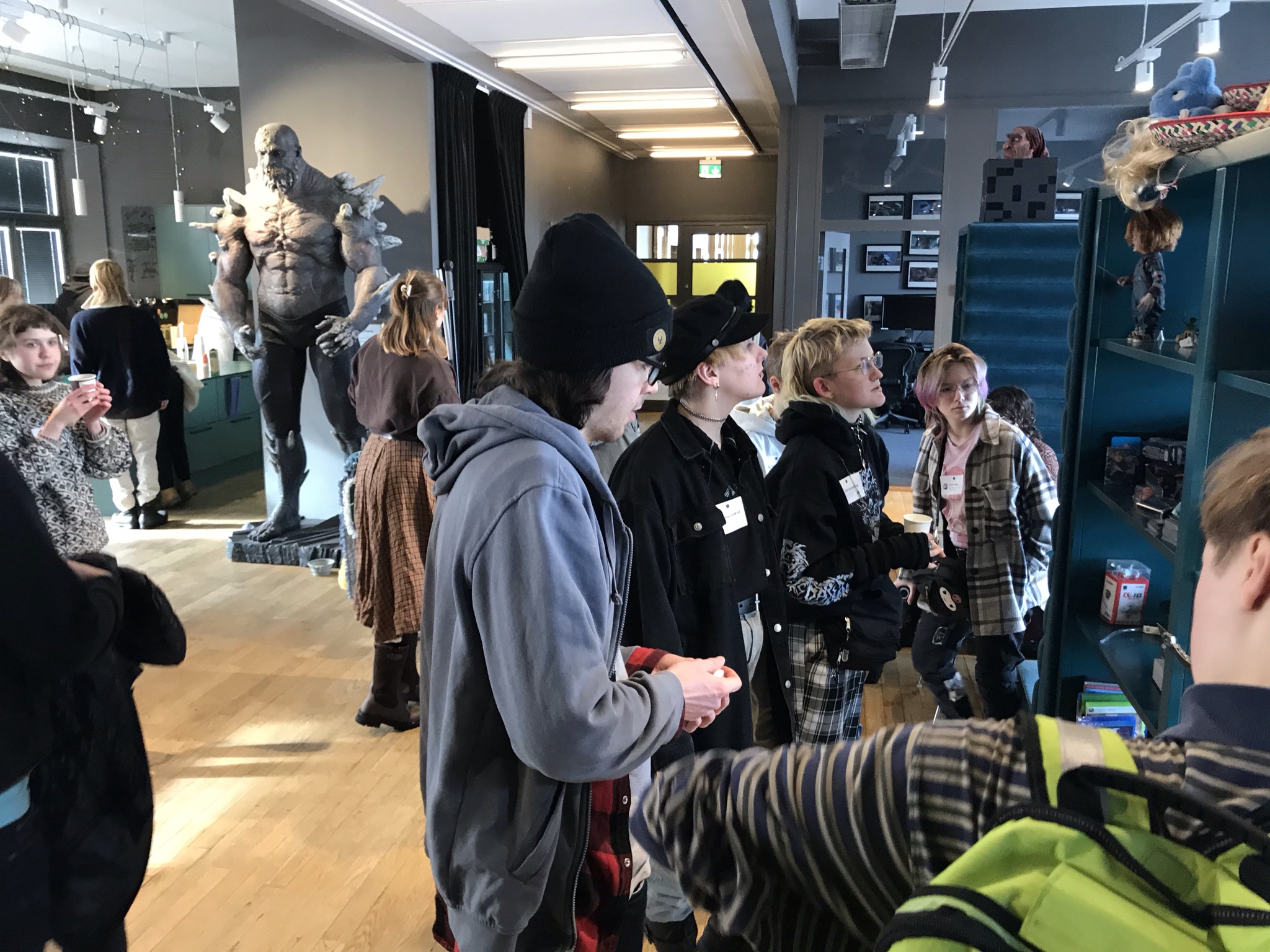
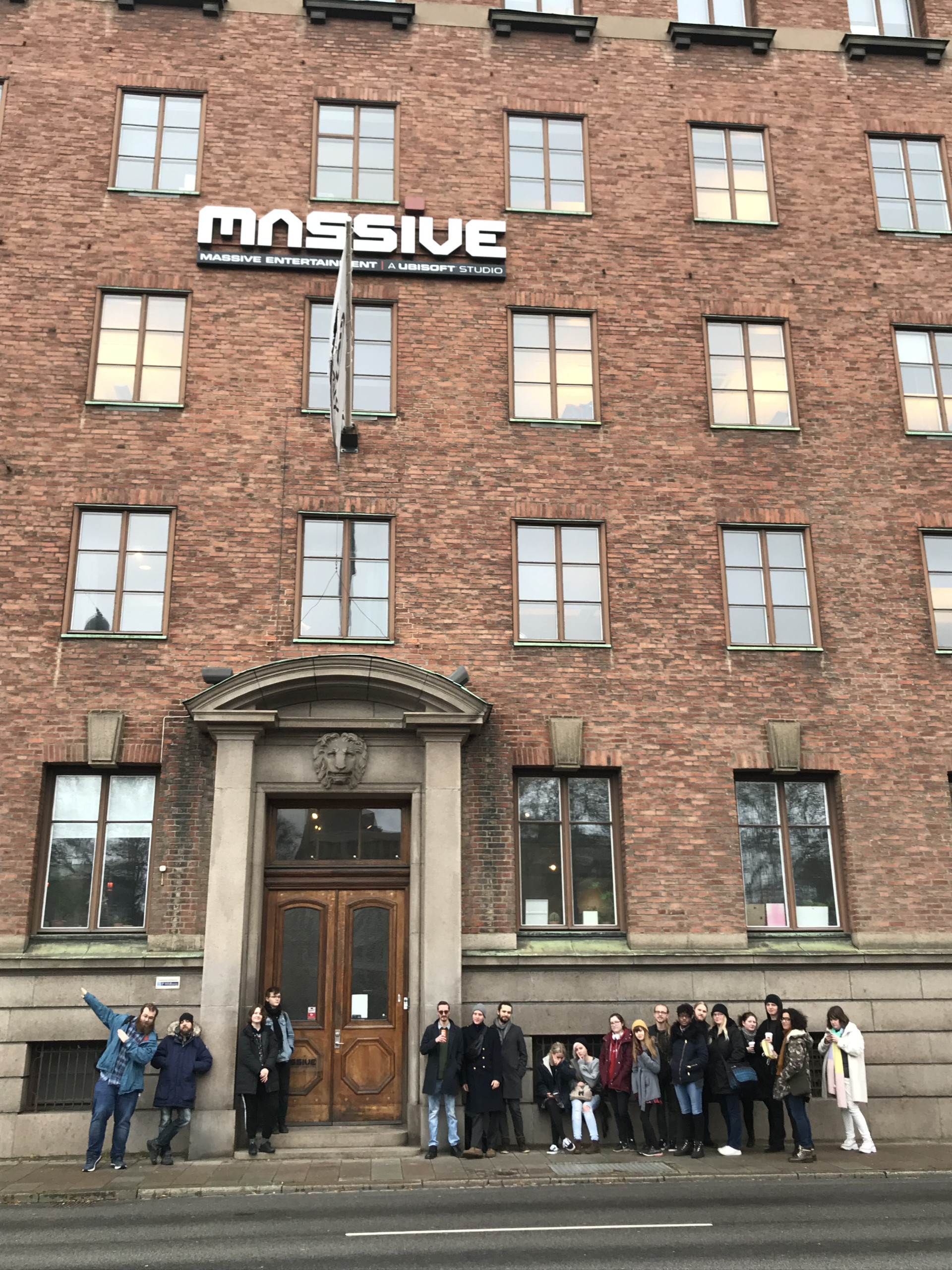
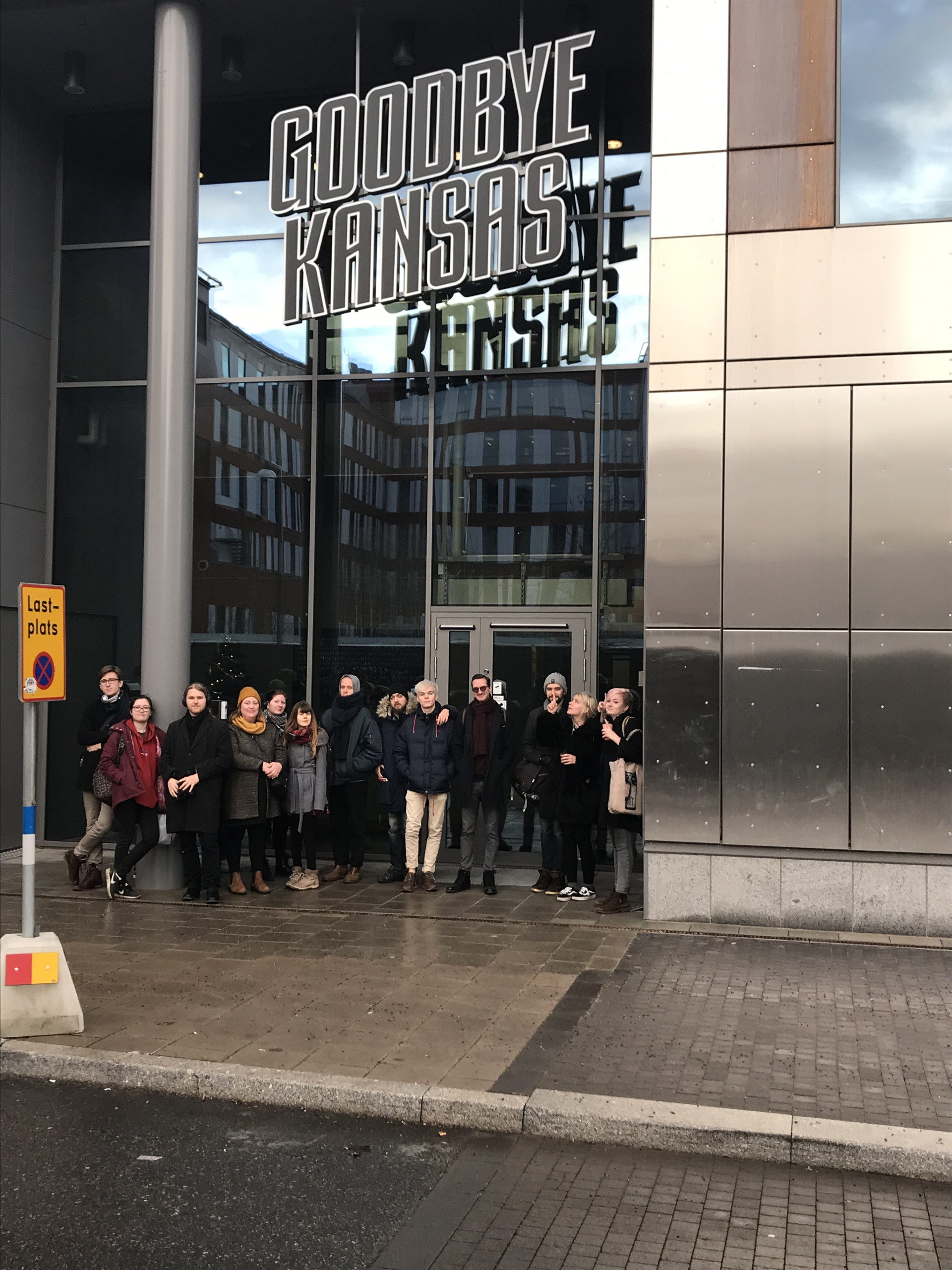
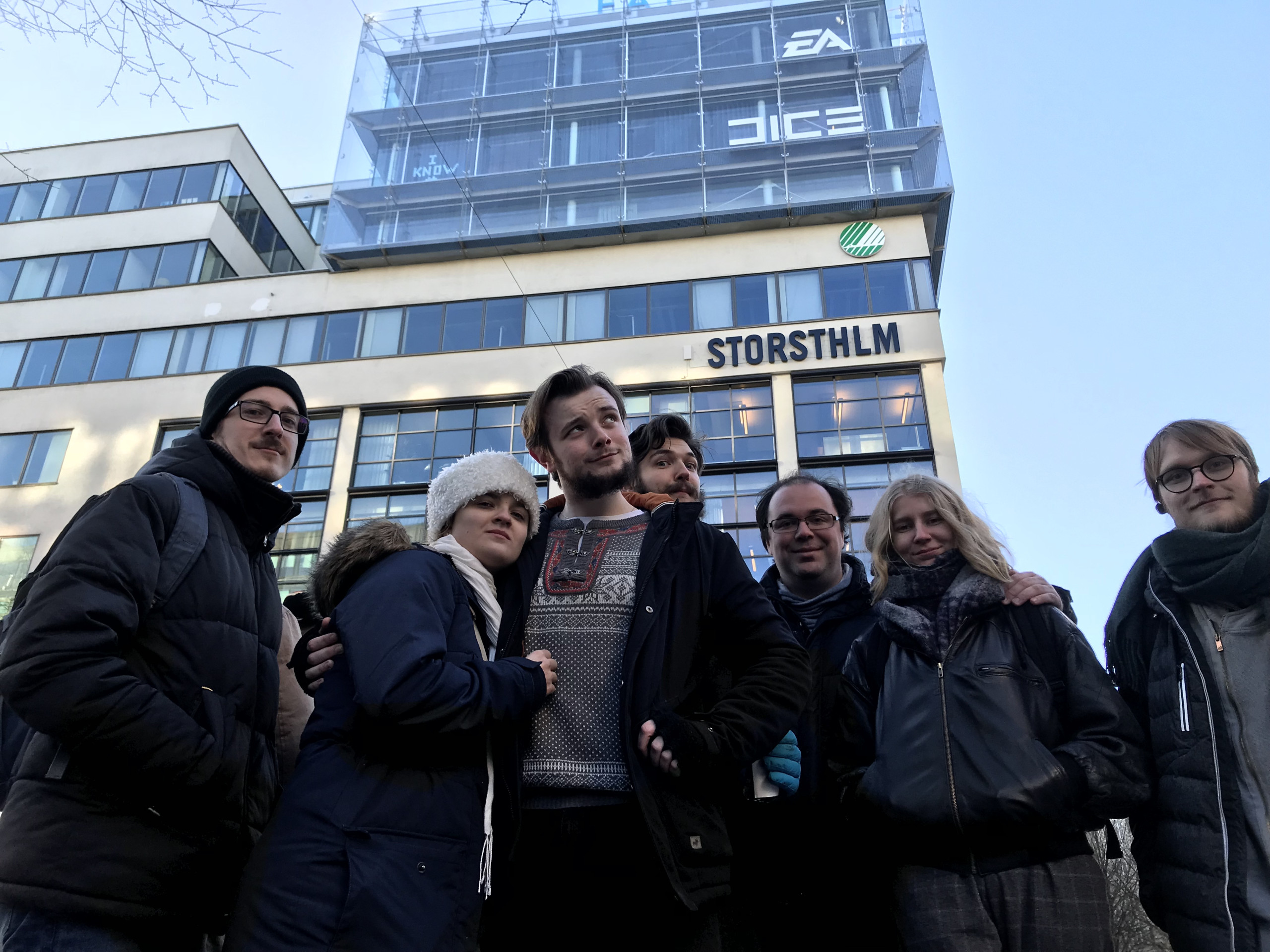
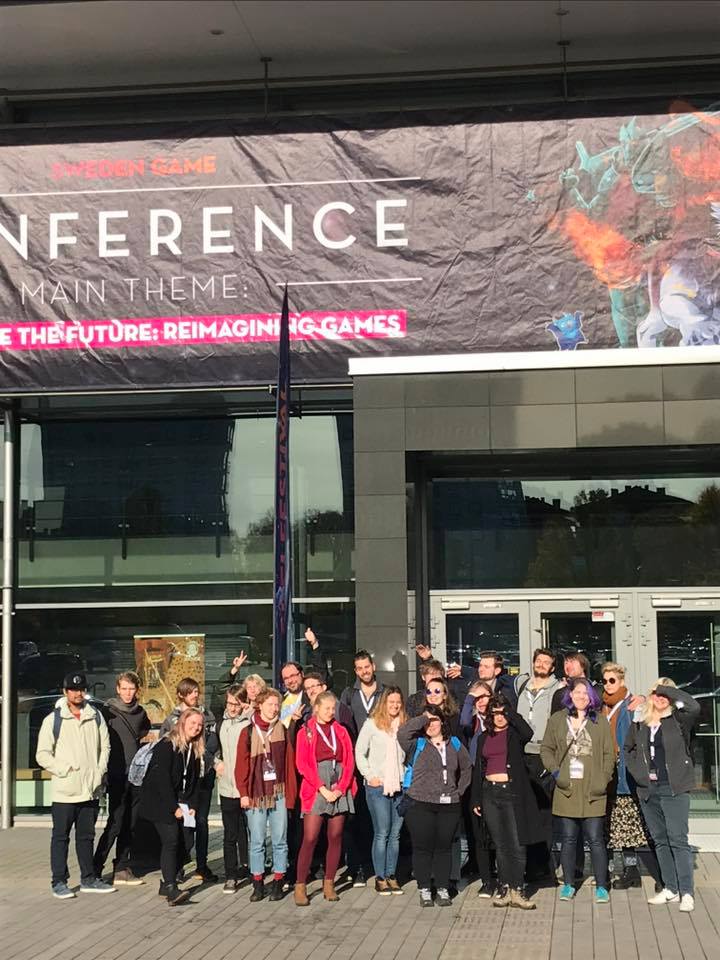
During the year, we make several study visits to studios for games, VFX, animation, etc. There we often get to meet concept artists, ADs and other professional roles who explain how their jobs are done and what their everyday life looks like. This is to get an insight into what it is like in different industries and orientate on different career paths. We feel this is one of the best ways in which our students become oriented towards possible paths forward.
We have visited different studios such as:
- Dice
- Envar studio
- Avalanche
- Massive Entertainment
- Paradox
- ILP (Important Looking Pirates)
- Mood Visuals
- Goodbye Kansas
- Starbreeze
- Tarsier Studio
- Slugger Film.
- King Malmö
- Elemental Games
STUDY VISITS AT SCHOOLS
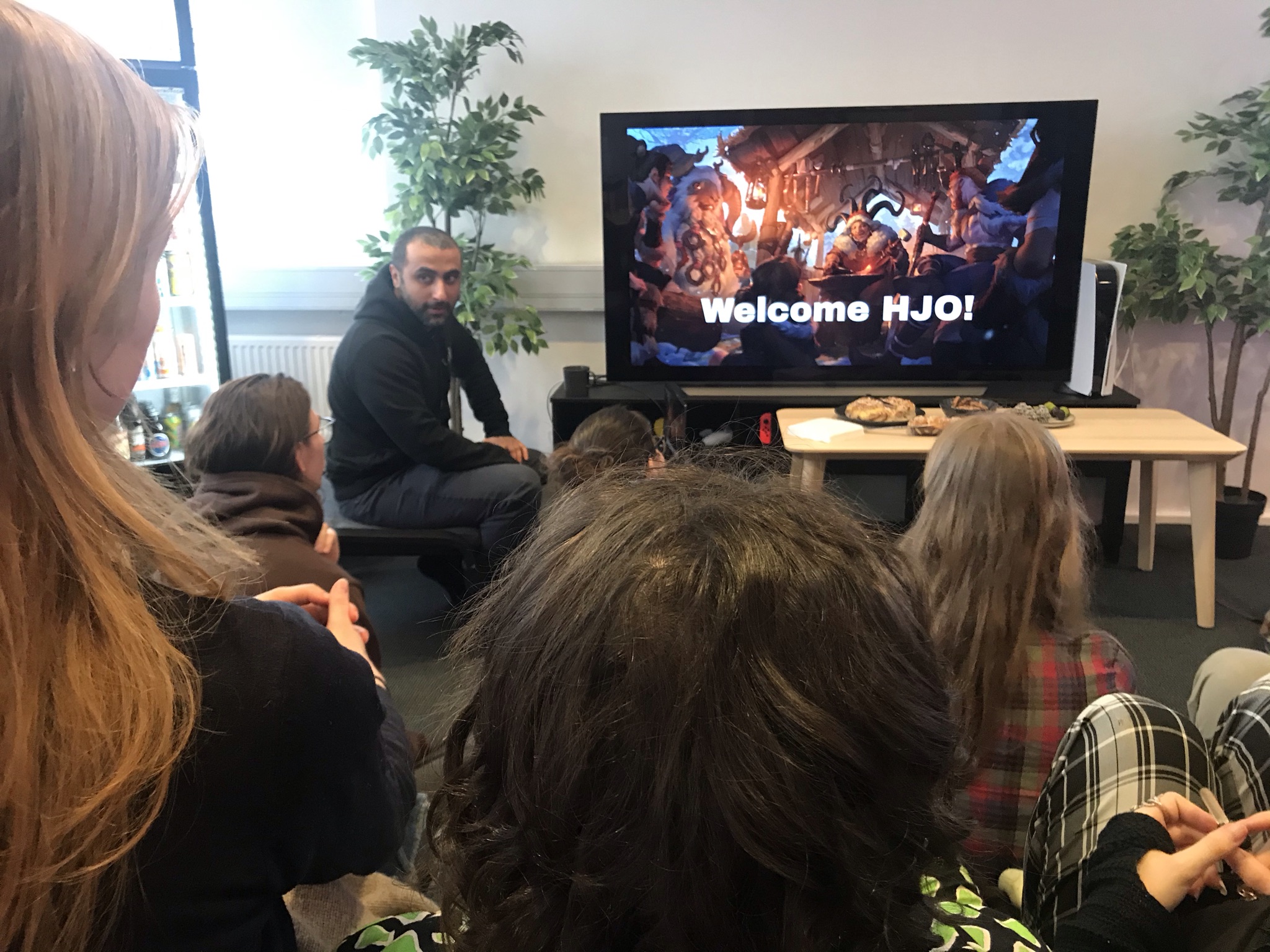
We also visit various unversities and higher vocational educations to inform about possible ways forward. Among other, we have visited:
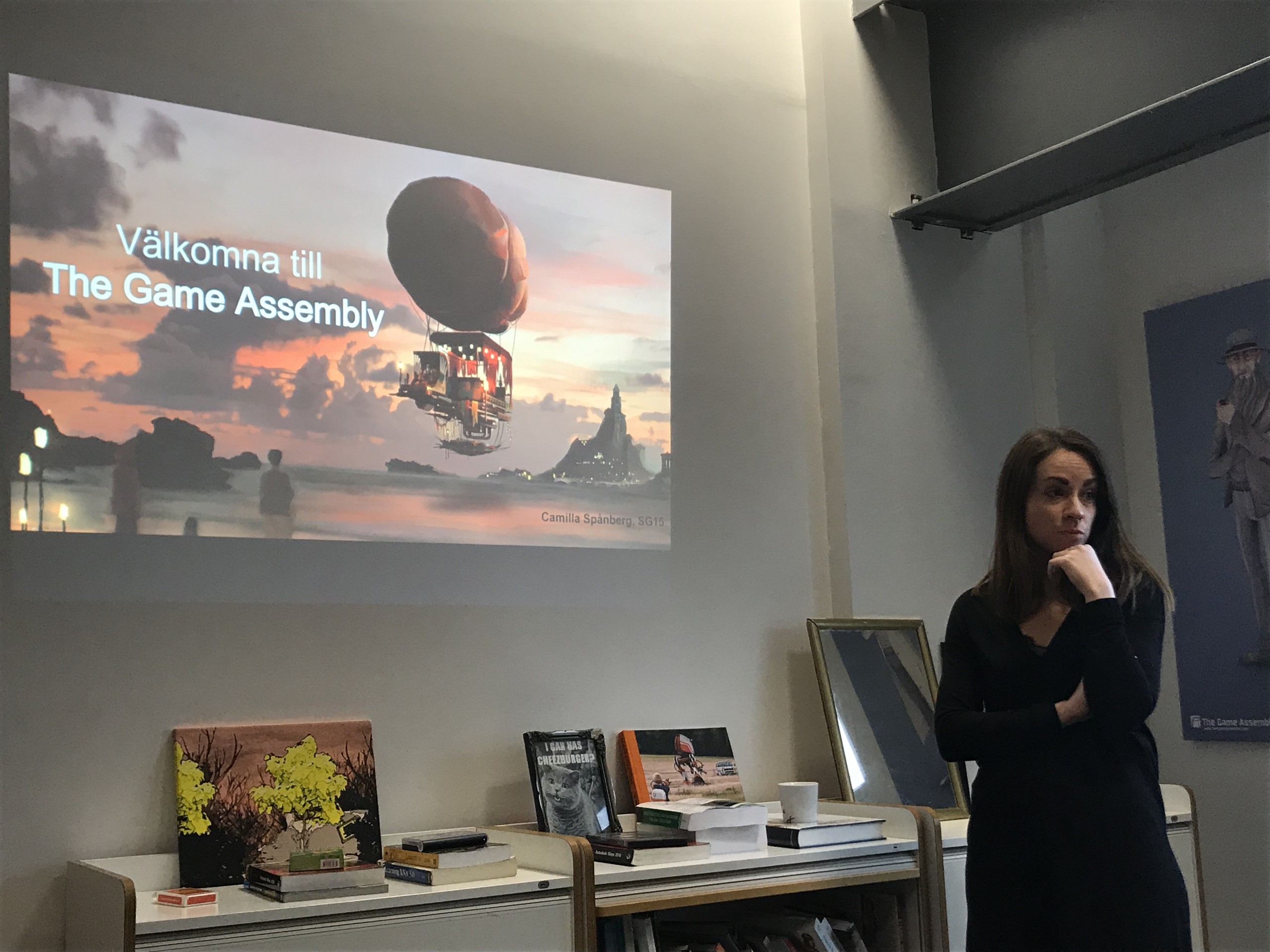
- The Game Assembly
- Futuregames
- Playground Squad
- The Animation Workshop
- Konstfack
- Hyper Island
- Högskolan i Skövde
- Sörängens folkhögskola
VISITS TO MUSEUMS AND DRAWING EXCURSIONS
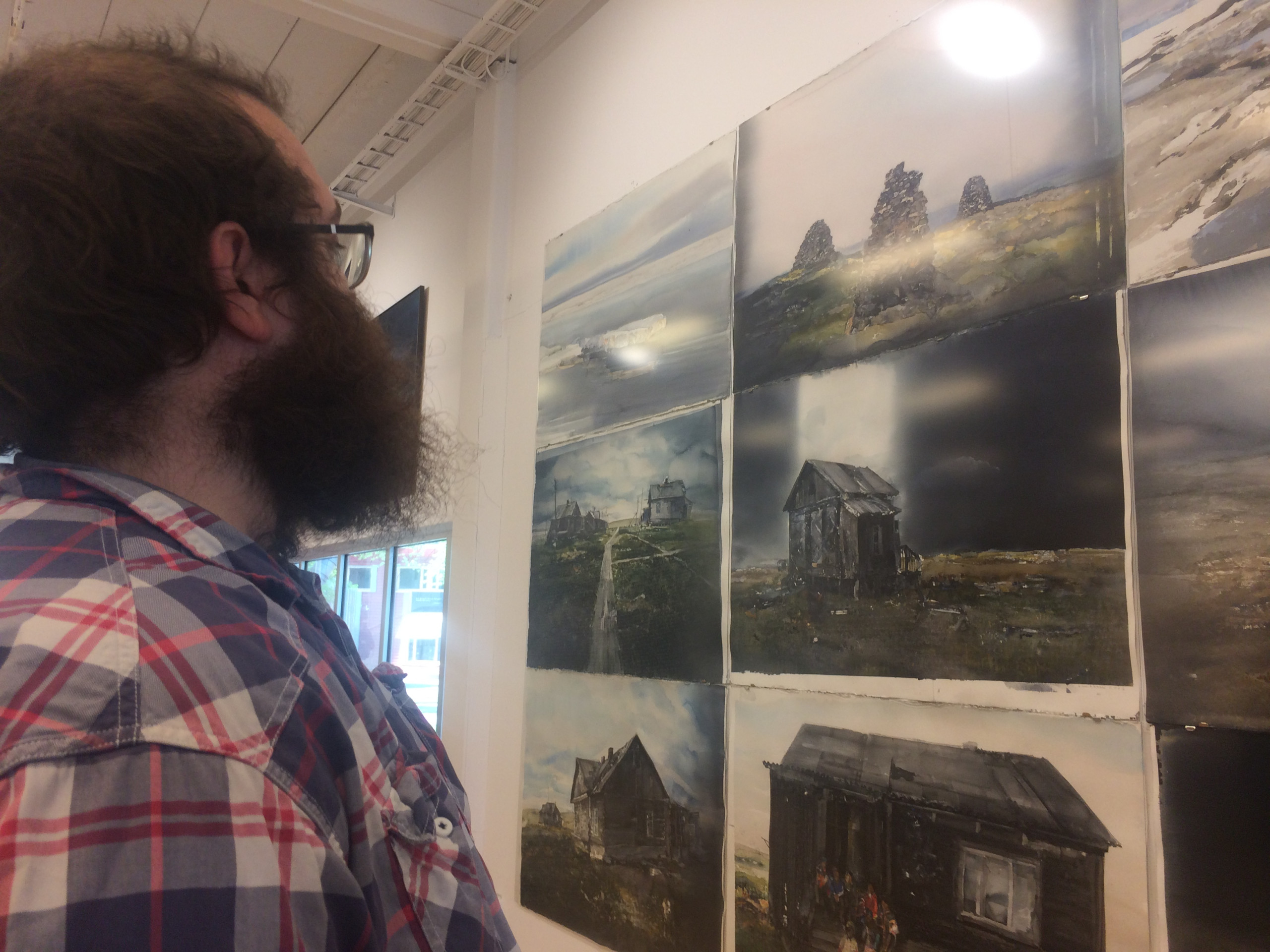
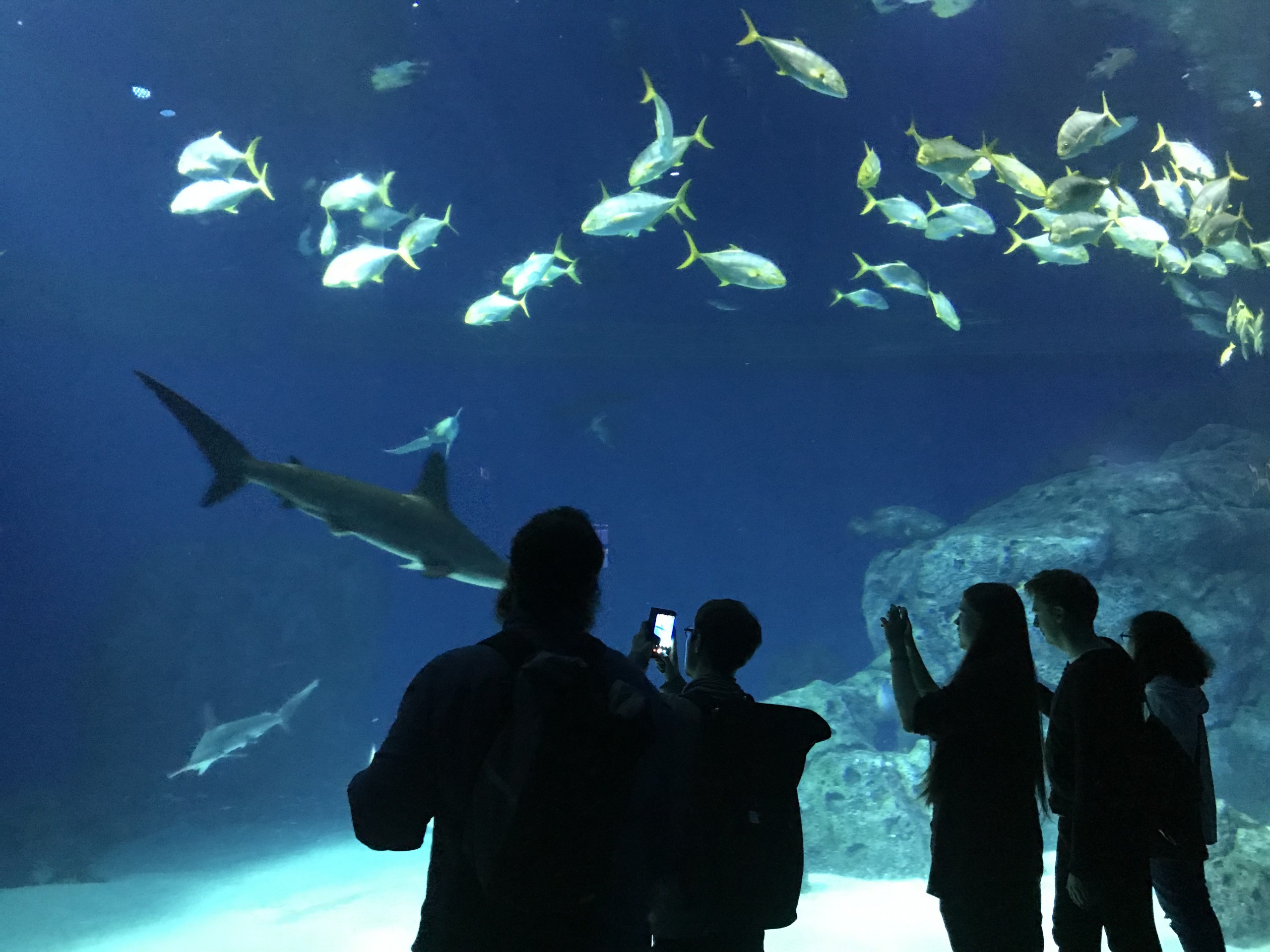
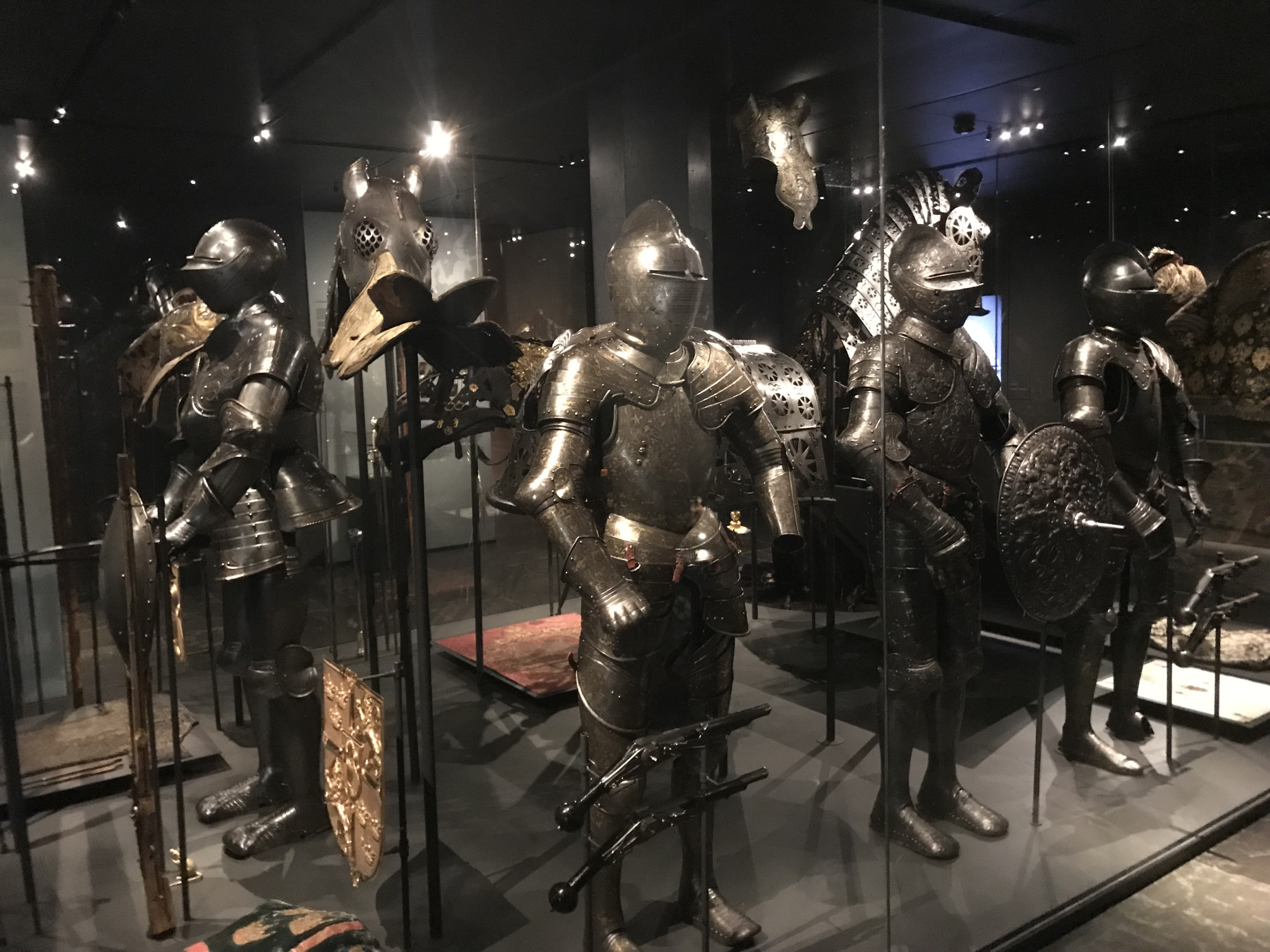
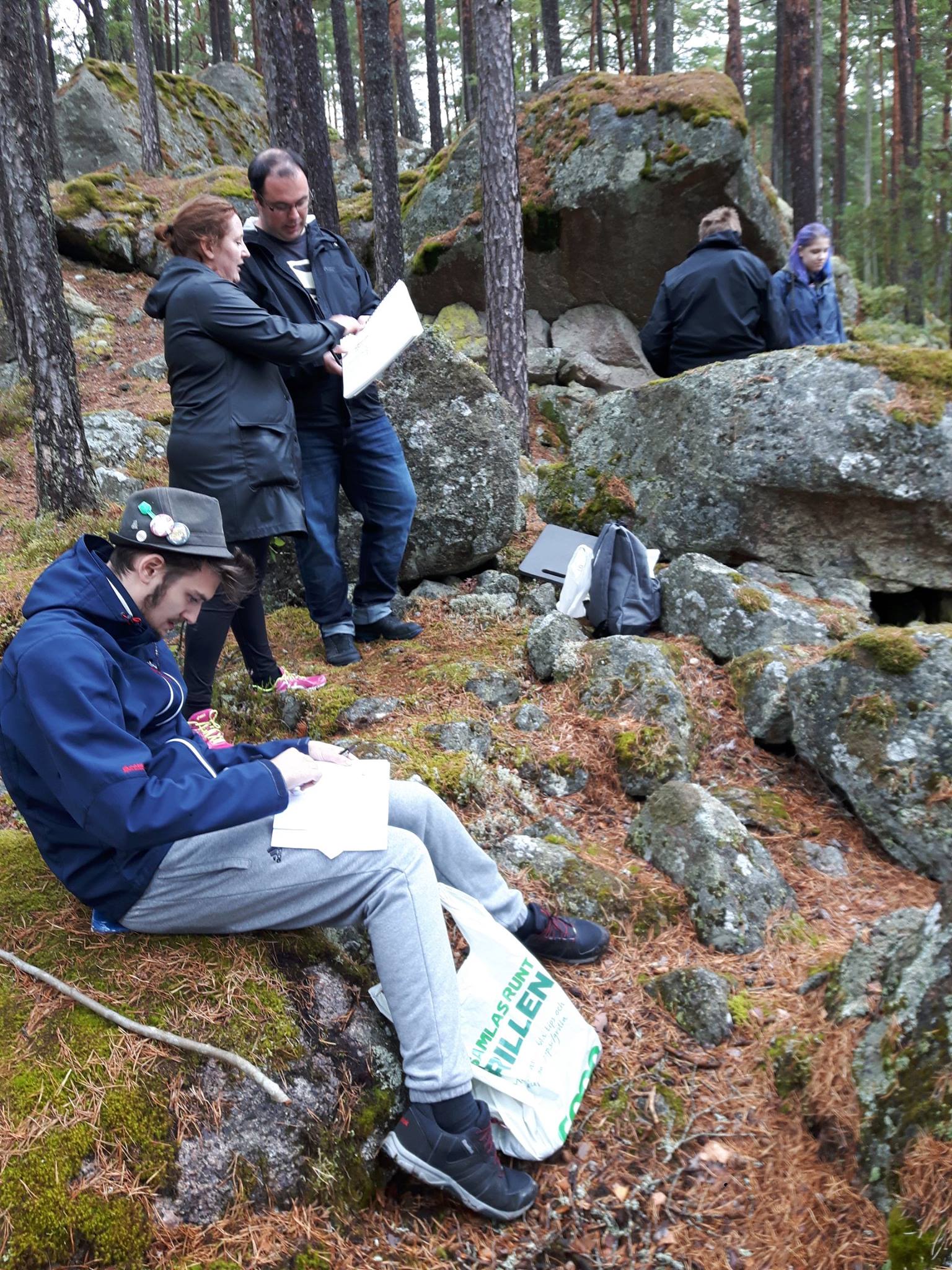
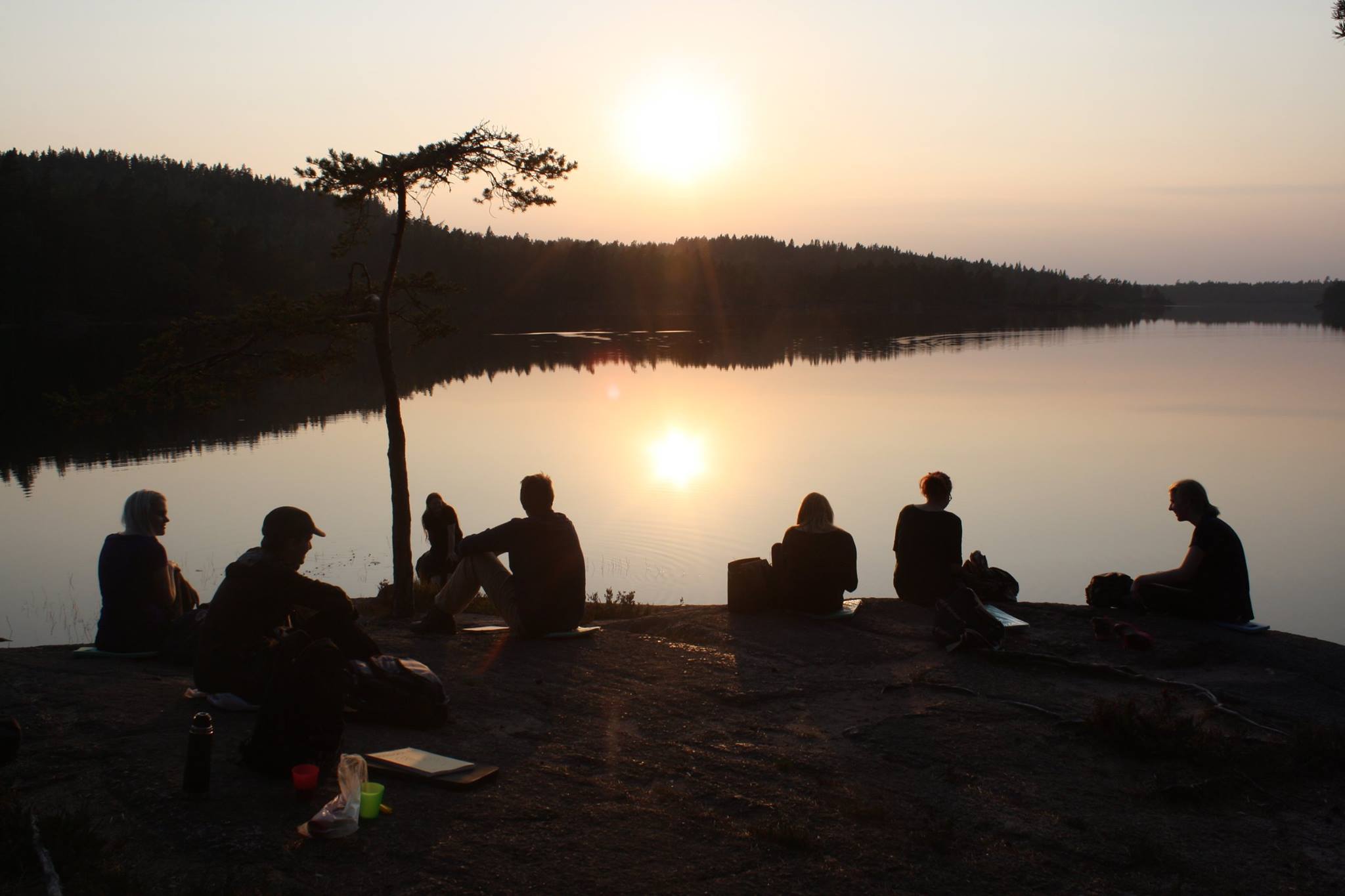
We also make a number of museum visits to relevant and interesting exhibitions and collections. Examples of museums we visited are the National Museum of Art, the National Museum of Natural History, Glyptoteket, the Nordic Watercolor Museum, the Zorn Museum, The Blue Planet, The National Treasury, the Gothenburg Art Museum, the Natural History Museum in Gothenburg, the Aros Art Museum in Denmark, etc. We also go on various excursions to draw and paint.
WHAT HAPPENS AFTERWARDS?
Since Concept Art & Illustration started in 2016, many of our students choose to continue their education in game development. Of those who have applied to higher vocational schools such as The Game Assemble and Futuregames, approximately 95% have been accepted on their first attempt. Many of our former students are now working in Entertainment Arts in one way or another. Several now work in the gaming industry and others have chosen to work freelance with concept art and illustration.
We have good contact with our Alumni and some of them are now working at:
- Fatshark
- Envar Studio
- Starbreeze
- King
- Sharkmob
- Paradox
- Myrkur Games
- The Gang
- Dupp Film
OUR DEAR ALUMNI:
Former students have applied to and been accepted to:
- The Game Assembly, i Malmö and Stockholm
- Future Games, Stockholm
- Yrgo – Gothenburg
- Playground Squad, Falun
- Konstfack – Graphic design & illustration
- Animation Workshop i Danmark – Character animation Graphic Storytelling
- Idea Academy – Rome
- Industrial design – Umeå University
- Architectural education at Chalmers University of Technology
- Animation och Bilderbok at Sörängens folk high school
STUDIO SPACE & EQUIPMENT
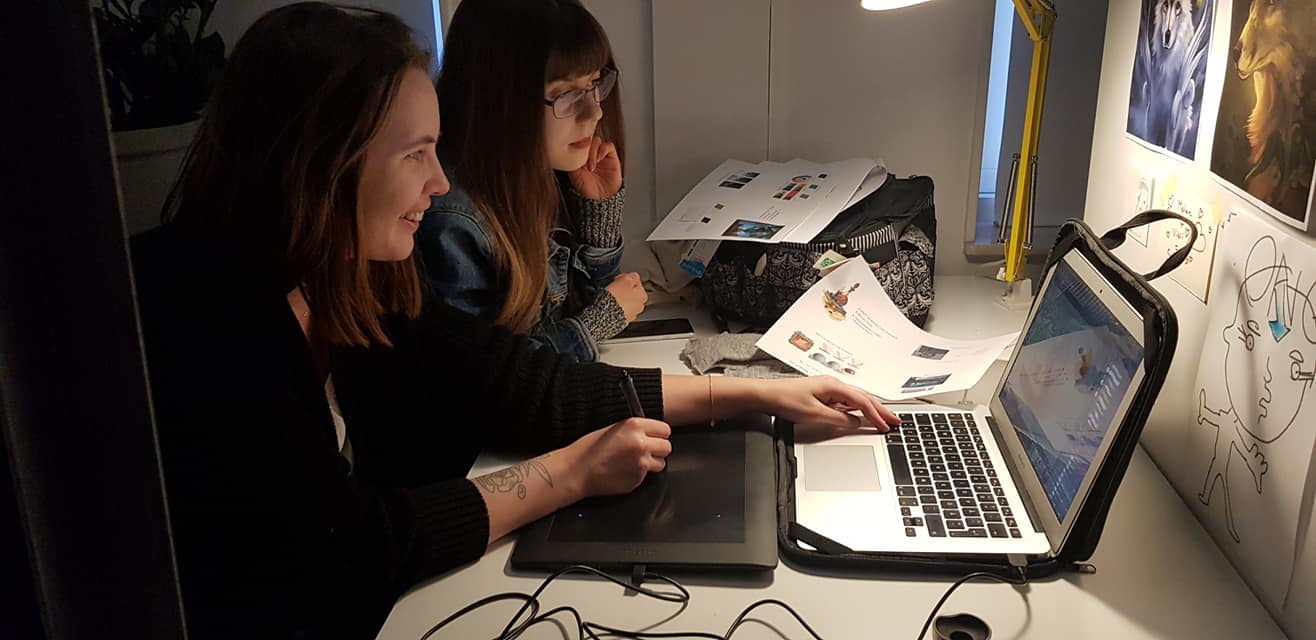
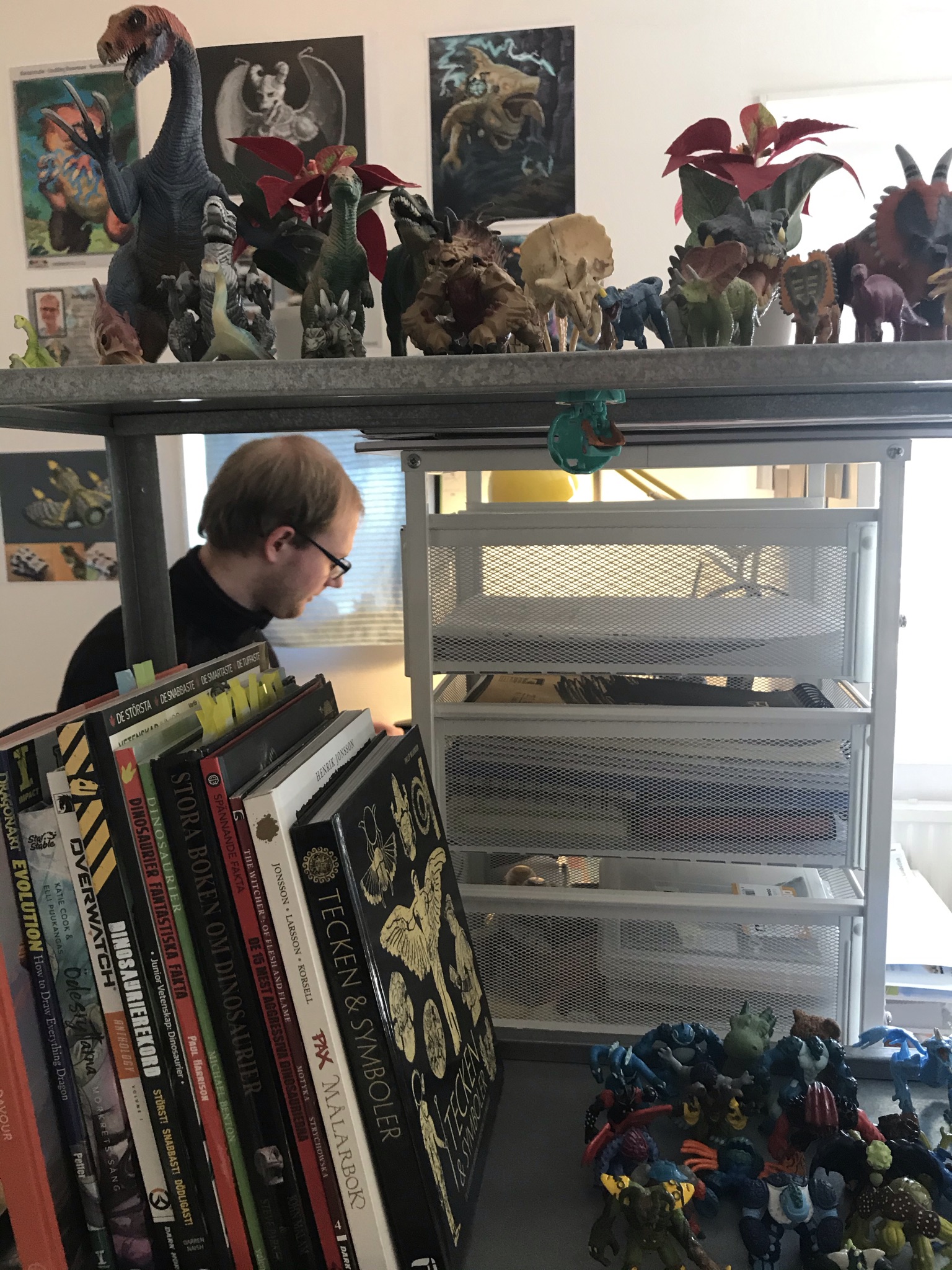
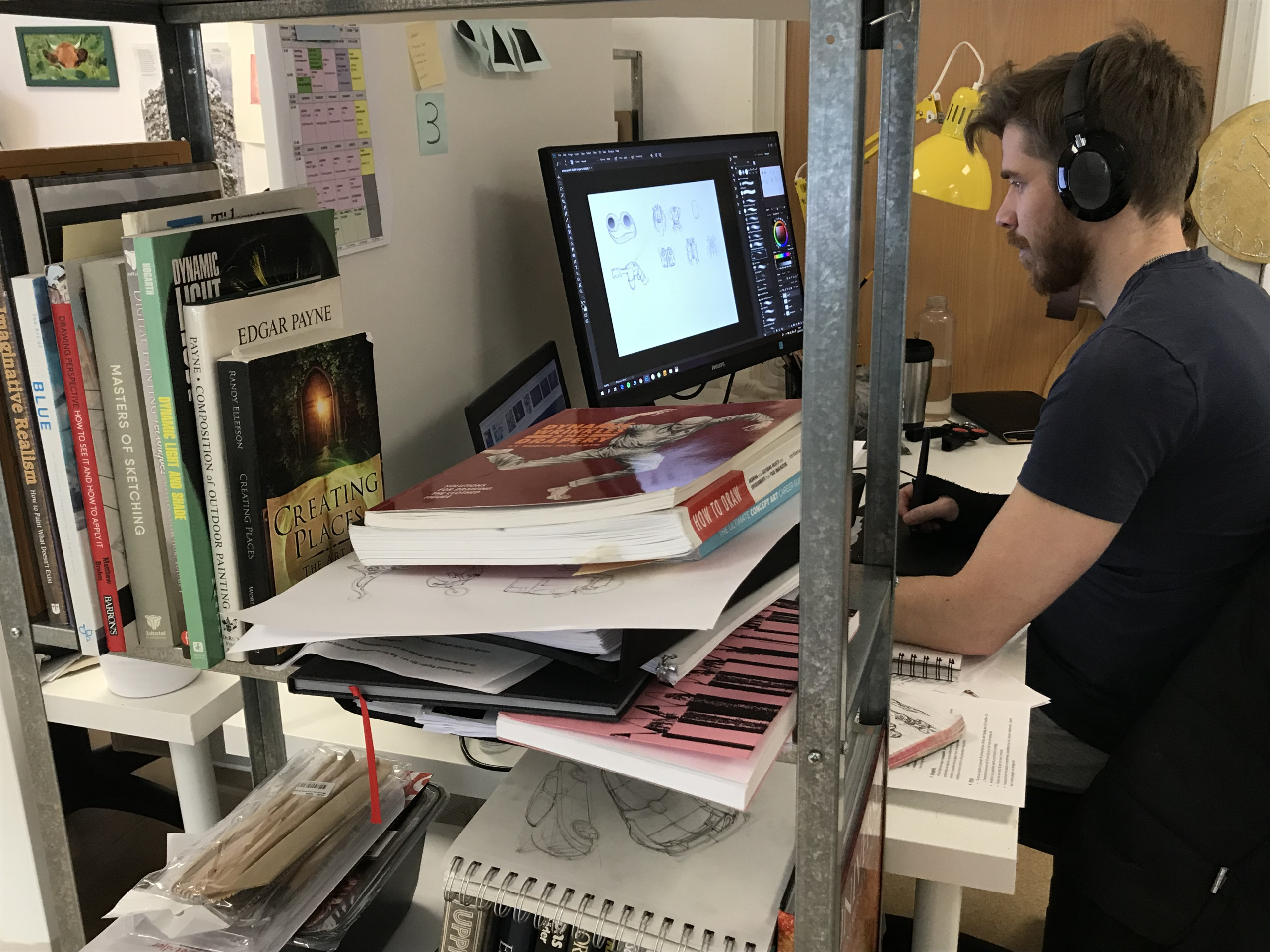
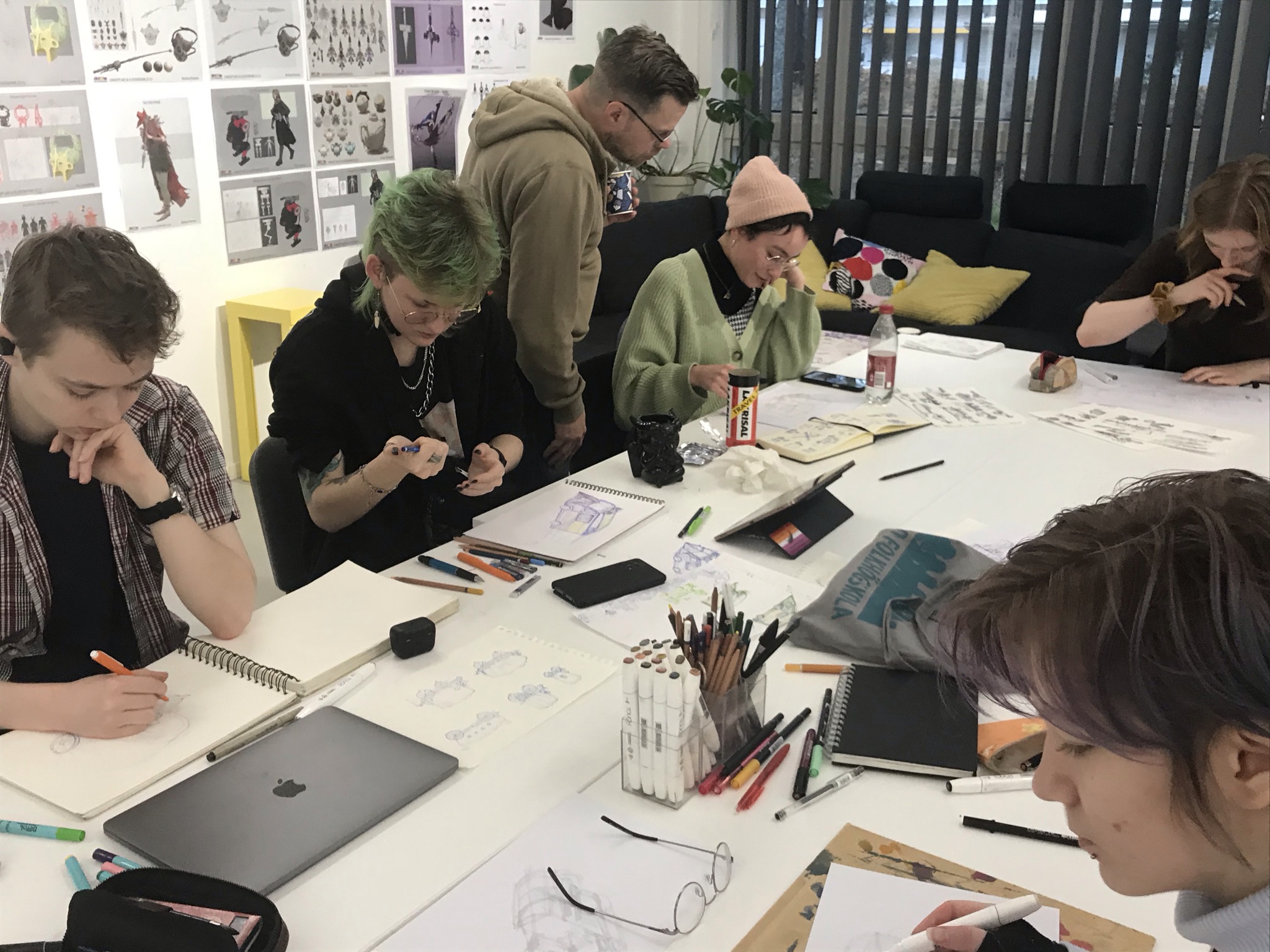
The Studio: Everyone who attends Concept Art & Illustration gets their own work space in one of the school’s studio rooms. This space, as well as all of the classrooms and facilities on campus is available to you around the clock during the school year. You will be equipped with a desk, office chair, shelf unit, material cart, lamp, power outlet and extension cords.
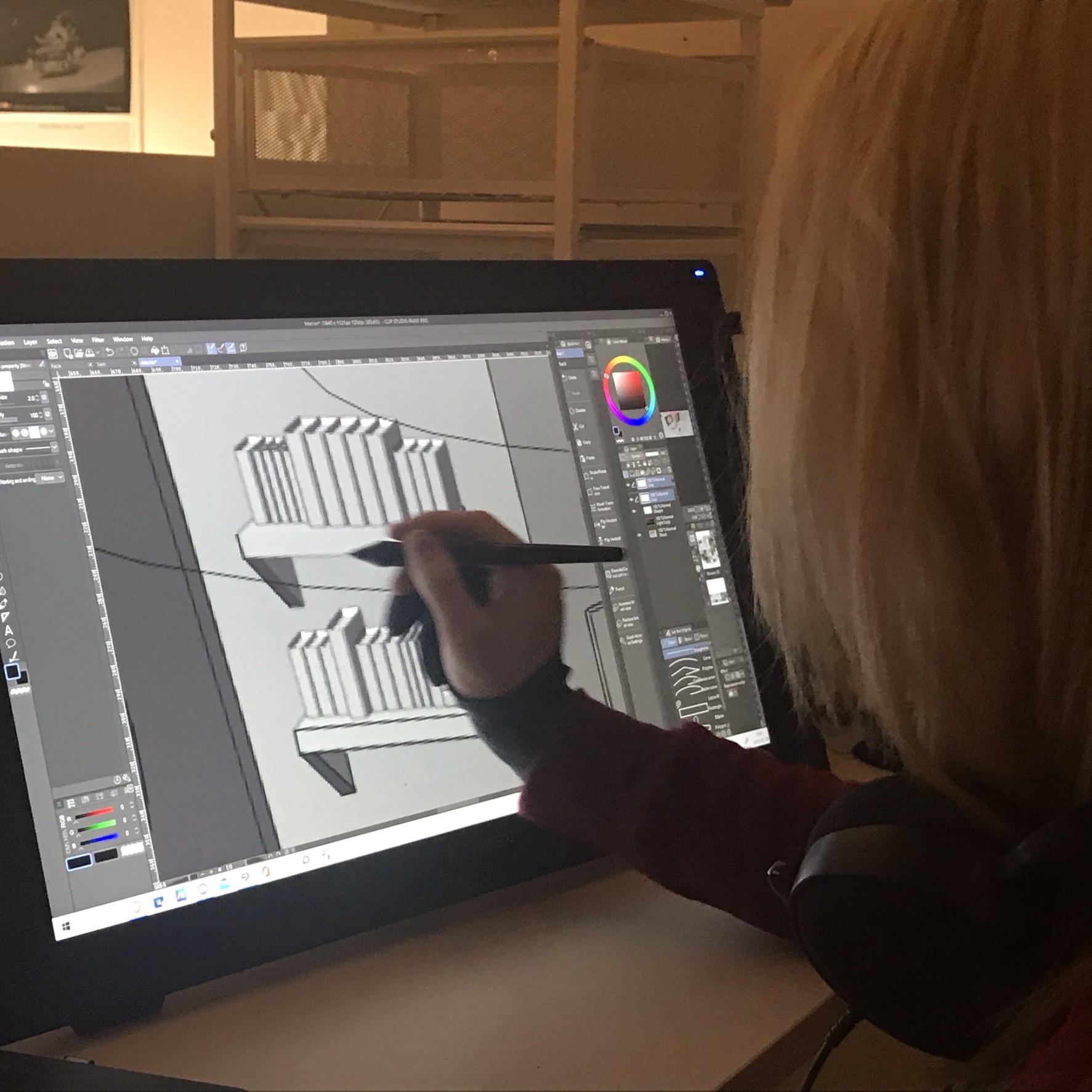
Digital equipment: You are expected to bring your own computer, drawing pad and/or drawing tablet that you use for digital assignments, as the school does not provide these. You are also required to have Adobe Photoshop, or other compatible program, on your computer. Make sure you have home insurance that covers your equipment in case of damage or theft.
STUDIO SPACES
COSTS DURING THE COURSE
Material fee: The school provides all the required art materials during the year which you will need in order to execute our assignments, as well as color prints of your work. We charge a material fee to cover these costs.
For those who attend Year 1, the material fee is SEK 3,000 per academic year.
For those in Years 2 and 2+, the fee is SEK 1,000 per academic year.
Costs for travel and field trips: This cost varies from year to year, but we estimate a budget of
SEK 3 000 per academic year is necessary in order to participate in all of our outings.
We plan our trips in accordance with the wishes of the participants.
Service charge: The school also charges a service fee for costs that are not covered by government grants. This fee includes a variety of miscellaneous costs such as meals during joint activities, coffee, tea, newspapers, copies and printouts, accident insurance, etc. For more information, look under the link “To study here – Costs for the current fee”.
Financial aid: Year 1 – The fundamentals is considered an upper secondary level education. Essentially it falls under high school studies and as such, it entitles to two years of financial study aid from the swedish government if you are a swedish citizen.
Student merit: To start year 1 you don’t have to have finished high school in order to be admitted here. We still want to see your latest grades and other educational certificates as they are required in the application, but they are not a deciding factor in what we look for. This, along with your portfolio work, personal letter and eventual interview are what we use to determine if you will be admitted.
Curriculum: As a separate educational body from the Swedish school system, we are able to choose content and design our own course plans, independent of any state-established curricula. We consider this a huge advantage in that we can shape our curriculum based on what we believe our students need and in order to solidly prepare them to seek higher education or to begin working in the entertainment industry.
Certificate of completion: Another big advantage with folk high schools, for educators and students alike, is that we do not use a grading system on individual assignments or at the end of the course. It is therefore your own desire for learning and developing that is the driving force to success, not grades. This also means that we can focus on each student’s skills and goals based on where they are in their own development. During the year you will have individual reviews on your progress and at the end of the year you will receive a certificate of completion listing the subjects that you have studied. How well you have demonstrated these tasks are not reflected in the certificate but more so in the work you have completed.
FAQ:s
”How does your course differ from other fundamental fine art courses?”
- We focus on teaching the fundamentals and principles behind image making rather than specific techniques or media. Most art courses you will find teach through exploring different techniques in media such as oil, watercolor, printmaking and ceramics, with an emphasis on the student finding an individual expression through these medias. Our focus is more on teaching the principles behind all image making with an emphasis on reaching visual realism. Examples of this are such as; the principles of how light and shadow or color behave in different lighted situations or how linear perspective works in order to portray things from life or from the imagination.
- Teaching how to draw with confidence from the imagination is another way we have niched our foundation course. Most other art courses focus solely on observation to study the physical world while our course takes this one step further and teaches how to construct anything from the imagination such as props, heads, the figure, etc from different angles, the same principles used in industrial design. This offers the student total freedom when designing anything from characters to environments.
- Most other courses in art focus on finding your own artistic expression and working from your own ideas about subjects that interest you personally. We focus more on technical aspects and skills rather than exploring one’s own artistic expression and always within the frame of a given assignment.
- We strive to deliver effective methods for learning with step-by-step instructions and we always provide the theoretical basis for each exercise. In other words, we present what we are studying, why we are studying this – what is the theoretical and practical application of this exercise – and how you go about executing the exercise. An important part of each exercise is establishing the common language around image making and design which helps us to communicate with and learn from each other. Many of the terms and much of the information presented is in English, as there often lacks equivalent terms in Swedish, as well as being the standard language for working in the industry.
- Our way of teaching is very task-driven and has clear stages and end goals. The lessons in Year 1 and Year 2 are not so individualized – everyone does the same exercises and follows the same program.
- We teach subjects that are not very common in art courses today, such as linear perspective, anatomy, construction, industrial sketching techniques, and simplification of form to name a few.
- We focus, above all, on the ability to realistically draw, paint and sculpt.
We usually work thematically in weekly blocks with our subjects. For example, a week (Monday-Thursday) can be dedicated to studying light and shadow with exercises related to that. Most of the time is spent working on assignments, but we always start a block by giving the theoretical basis and application of our subjects in the form of lectures, visual presentations and demonstrations, as well as presenting the objectives of each exercise at the start of the week. Class time is between 9.00 and 15.00, but in order to complete all the exercises, students often need to work assignments after class as there are daily deadlines.
Working thematically gives the student a greater continuity and ability to learn, understand and apply the principles we teach, unlike at a traditional High School with many different subjects being taught during the week. Things that can break up our schedule are morning assembly on Mondays, art history class on Wednesdays and croquis on Fridays. We also share our work with each other by putting it up on the classroom walls and analyzing how everyone solved the exercises. This is a very integral part of the learning process as we also practice giving and receiving constructive criticism and feedback.
“Does one need to apply again for Year 2?”
Yes, you do. All our courses have separate admission, even if they are related in terms of content. There are a variety of factors in why you are not automatically accepted to the next course. You must successfully have completed 80% of the course which includes attendance and assignments, as well as being able to demonstrate and apply the fundamentals we have studied. Other considerations that weigh heavily are the students overall development during the school year, their motivation for and capacity of working with concept art and illustration in the future.
Yes, we do in the vast majority of cases. The fundamentals we go through in Year 1 are completely tailored to provide you with a solid foundation and preparation for Year 2. In order for you to be accepted directly into Concept Art and Illustration Year 2 requires that you demonstrate a solid knowledge of these fundamentals through your portfolio work.